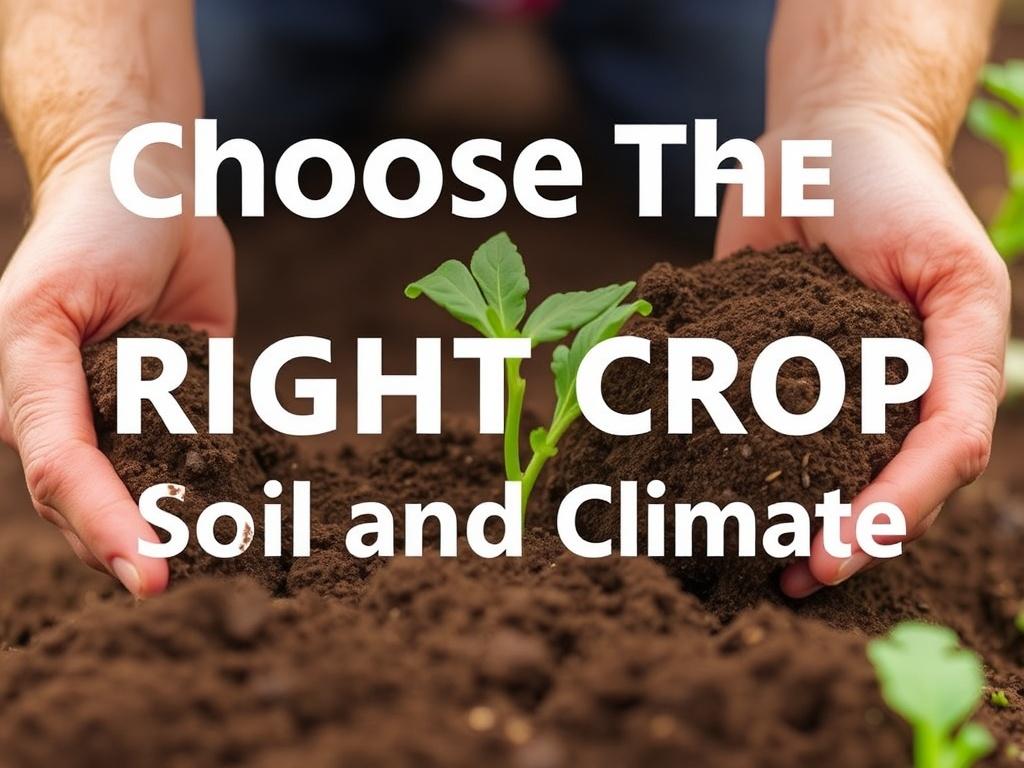
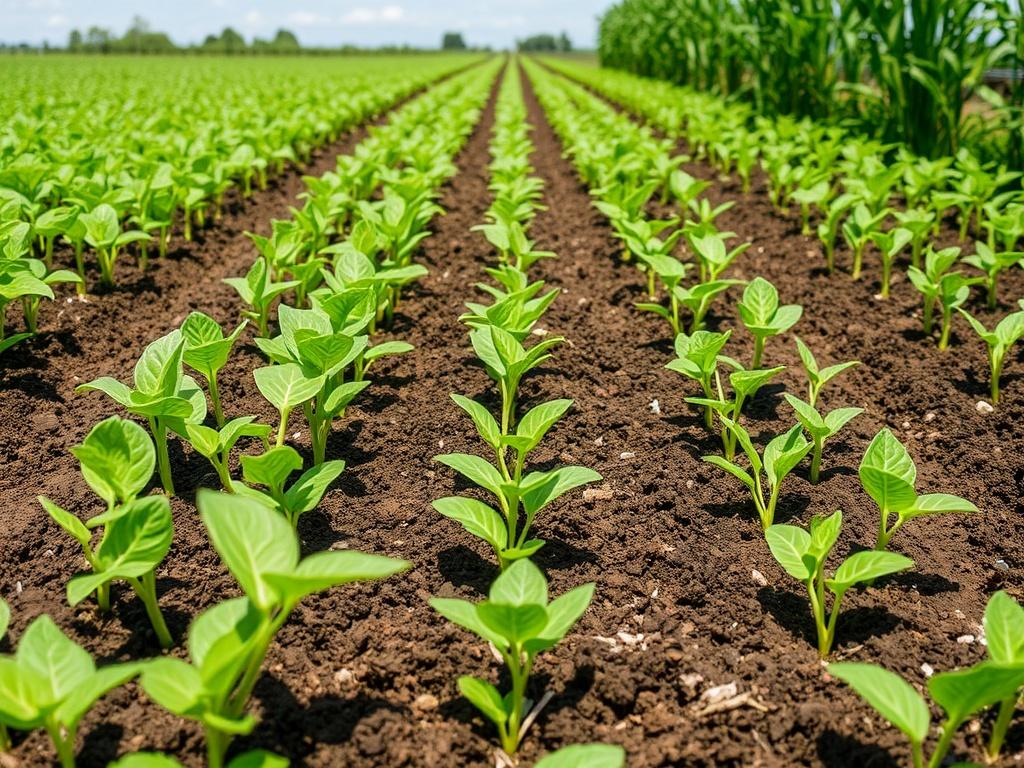
Deciding what to plant is more than a wishlist. It’s an exercise in listening—to the dirt under your boots, the pattern of the rainfall, and the little microclimates that run along fence lines and hedgerows.
This guide walks through the science and the craft of matching crops to place, with hands-on steps, real examples, and useful tables to help you turn data into decisions. Whether you manage a backyard plot, a small farm, or a larger acreage, the goal is the same: find crops that will thrive with the least wasted effort.
Содержание
Start with the ground beneath your feet: soil basics
Soil tells a story about what will grow well and what will struggle. Texture, structure, pH, and organic matter are the main chapters of that story, and they’re easy to read once you know where to look.
Texture—sand, silt, clay—controls water holding and root penetration. Sandy soils drain fast and warm early, but they need more frequent watering and nutrient inputs. Clay holds water and nutrients but can suffocate roots if it stays saturated and cold.
Structure matters too: a crumbly, well-aggregated soil lets roots and air move freely, while compacted layers create hard pans that stunt growth. Take note of how a handful of wet soil behaves; that tells you about structure in an instant.
Testing soil: what to collect and why
A lab test gives actionable numbers: pH, available phosphorus, potassium, and often micronutrients. It’s the single best investment for targeted, effective amendments.
Collect samples from several spots in a field or garden and mix them to get a representative composite. Avoid sampling just the obvious high spots or low patches unless you plan to treat those separately.
Interpret numbers in the context of your crops. For example, blueberries and brassicas prefer different pH ranges, and knowing yours helps narrow your options immediately.
Organic matter, biology, and the living soil
Organic matter is the soil’s insurance policy: it buffers drought, supplies slow-release nutrients, and supports the microbial community that unlocks fertility. Soils with higher organic matter are forgiving and responsive.
Simple tests—like watching how long it takes a soil to absorb water, or whether seedlings emerge vigorously—tell you about biological health. Earthworms are an excellent informal indicator of a healthy soil ecosystem.
Building organic matter takes time; cover crops, compost, and reduced tillage are practical strategies you can start right away. These practices widen the number of crops that can thrive on a site over several seasons.
Understand your climate: more than just a zone on a map
Climate dictates what a plant can tolerate and when it can complete its lifecycle. Knowing your hardiness zone is useful, but it’s only one piece of the puzzle.
Growing degree days, frost dates, rainfall seasonality, and extremes like heatwaves or late frosts often matter as much as average winter lows. Two spots in the same zone may behave differently because of elevation, proximity to water, or urban heat.
Track local weather patterns and ask neighbors about their perennial successes and failures. That local intelligence shortens the learning curve more than reading general guides alone.
Hardiness zones, frost dates, and growing degree days
Hardiness zones predict winter survival for perennials and often determine which fruit trees or shrubs will live long-term. For annuals, growing degree days (GDD) tell you whether a crop can reach maturity before the season ends.
Frost dates—both last spring frost and first fall frost—should anchor your planting calendar. When in doubt, plan for a slightly shorter season and choose faster-maturing varieties; that hedges against a late cold snap.
Many extension services publish GDD maps and calendars for common crops; use them to line up variety days-to-maturity with your available season length.
Matching crop needs to site conditions
Every crop has a set of cardinal requirements: preferred pH range, water demand, tolerance to salinity or flooding, temperature thresholds, and root depth. Matching these to your site reduces stress and input needs.
Create simple crop profiles—one-page notes that list the essentials for each candidate plant. Cover the obvious items first: water needs, frost sensitivity, and preferred soil texture.
Don’t forget secondary traits, like susceptibility to particular pests, or whether a crop benefits from mycorrhizae; these can tip the choice when two crops otherwise look equally suited.
Water and root depth: the invisible limits
Shallow soils over bedrock or hardpan favor shallower-rooted crops like lettuce, onions, and many herbs. Deep soils support corn, sunflowers, and deep-rooted legumes that exploit moisture at depth.
In areas with limited irrigation, prioritize drought-tolerant crops or those with short, intense water needs that align with available supply. Mulch and reduced-tillage strategies help conserve stored soil moisture.
If your water is saline or alkaline, seek varieties known for tolerance or consider management interventions before committing to sensitive crops like certain fruit trees.
pH and nutrient availability
Soil pH governs nutrient availability and microbial activity. Most vegetables thrive near neutral (6.0–7.0), but many ornamentals, blueberries, and azaleas prefer acid soils below 5.5.
Lime raises pH gradually; sulfur or acidifying fertilizers lower it. Making these changes takes months to become effective, so plan amendments well before planting perennial crops or trees.
Micronutrient deficiencies sometimes mimic other problems. If plants show odd symptoms after addressing pH and macronutrients, a targeted tissue test can reveal hidden shortages.
Annuals, perennials, and the trade-offs
Choosing between annual crops and perennials is a strategic decision. Annuals give quick returns and flexibility; perennials require patience but reduce yearly soil disturbance and often demand less fertilizer once established.
For market-oriented growers, perennials like berries and grapes can create long-term value but require upfront investment and careful site matching. Annual vegetables are a faster route to income and learning about local microclimates.
Mixing both approaches—annual vegetable strips among perennial hedgerows, or rotations that incorporate cover crops—often produces resilience and diversified income streams.
Practical step-by-step process for crop selection
Approach the decision as a sequence: evaluate site, gather data, shortlist crops, trial, and scale. Each step reduces uncertainty and costlier mistakes later on.
Start with a soil test and historical weather data. Then cross-reference crop requirements with your site conditions and market realities.
Finally, run small trials before committing large acreage. Trials reveal real-world interactions—pests, microclimate shifts, and labor demands—that no chart can fully predict.
Test soil and map variability across your field or garden.
Document growing-degree days and frost windows for your site.
Create a shortlist of crops that fit the basic soil and climate profile.
Run small pilots and keep detailed notes on yields, labor, and pest pressure.
Scale gradually, adjusting practices and crop selection based on observed outcomes.
Soil amendments and management to expand your options
While some decisions are about matching to current conditions, others are about changing conditions to suit a crop. Amendments can broaden your choices but require cost-benefit thinking.
Lime corrects acidity for many vegetable and cereal crops. Gypsum improves sodium-affected soils without altering pH. Organic matter additions improve nearly every soil property, from structure to water-holding capacity.
Drainage fixes—like subsurface drains or raised beds—can convert a marginal patch into productive ground. Consider long-term returns when investing in major soil works.
Cover crops and green manures
Cover crops add organic matter, suppress weeds, and can break pest cycles. They’re a practical amendment strategy that also protects soil between cash crops.
Choose species based on your goals: legumes for nitrogen, brassicas for biofumigation and quick biomass, grasses for building carbon. Termination timing matters—too late and you delay planting; too early and you reduce benefits.
Integrating cover crops into a rotation is one of the most cost-effective ways to improve a site over several seasons without heavy mechanization.
Irrigation strategy and water-smart choices
Water is often the limiting resource. Match crops to your reliable water supply and design systems that apply water efficiently where and when plants need it.
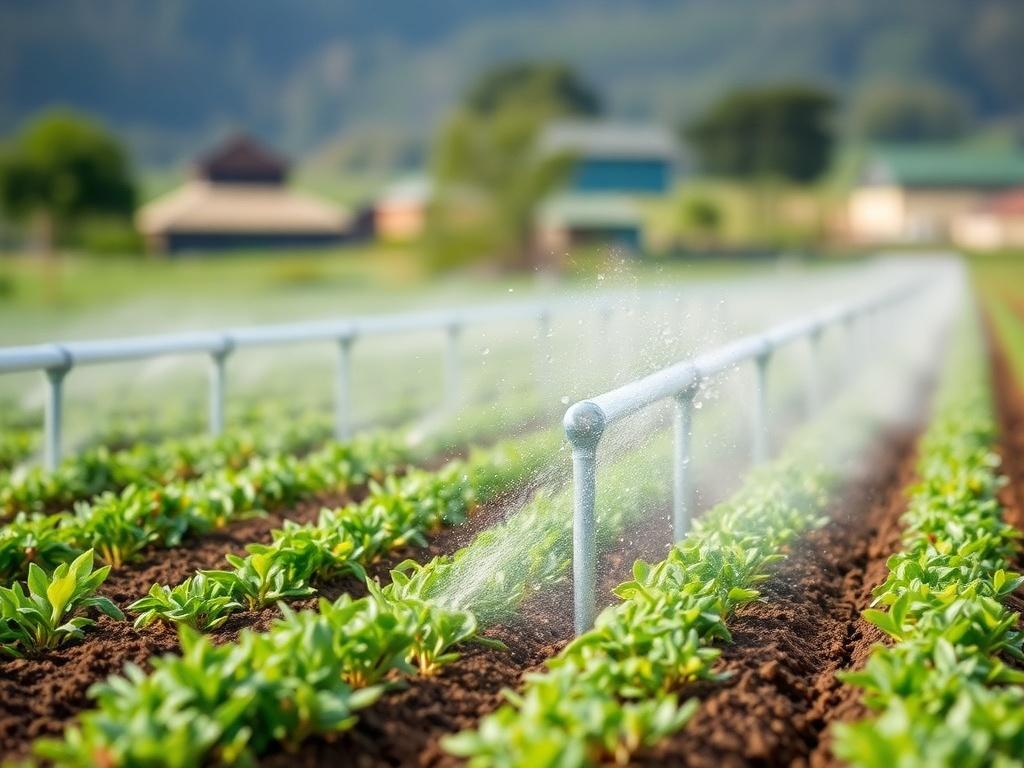
Drip irrigation delivers water to the root zone and minimizes evaporation, which benefits high-value row crops and perennials. Sprinklers are versatile but can increase disease pressure for some crops by wetting foliage.
Consider scheduling irrigation by soil moisture sensors or simple tensiometers. Saving water without stressing crops is both an environmental and economic win.
Managing drought-prone sites
Drought-prone areas demand choices that conserve water: mulches, reduced tillage, and drought-tolerant species. Perennial grasses and certain shrubs can be long-term, low-water options for marginal areas.
Stagger plantings also helps. Planting quick-maturing crops in cooler springs or opting for late-season crops that use residual moisture can spread demand across the season.
For many growers, a portfolio approach—mixing high-value, water-intensive crops in small areas with larger low-water areas—optimizes returns per drop.
Pest, disease, and biodiversity considerations
No crop choice is immune to pests and diseases, but diversity and rotation reduce pressure and break cycles. Repeating the same crop in the same place year after year invites trouble.
Rotate families and roots-depth classes to minimize pathogens that persist in soil. For instance, alternate solanaceous crops with grasses or legumes rather than repeating tomatoes and potatoes in the same plot.
Encourage beneficial insects by integrating flowering strips, hedgerows, or cover crops that provide habitat and early-season forage. Biodiversity is a practical defense, not just an aesthetic choice.
Variety selection: the small decisions that matter
Within a crop, variety choice often determines success more than the species itself. Varieties differ in days-to-maturity, disease resistance, yield habit, and flavor.
Source varieties tested in climates similar to yours or, better, from local seed savers and extension trials. Local adaptation can trump advertised yields from unrelated regions.
Keep records of which varieties perform best in which beds. Over several seasons you’ll build a practical catalog that speeds future decision-making.
Economics and market fit
Choosing what to grow must make economic sense. Consider input costs, labor demand, storage needs, and market access before committing to large plantings.
High-value crops can justify more intensive management and higher input costs, but they also attract more pests and require precise timing for harvest. Commodities may need low-cost mechanization to be profitable.
Match your production capacity to market windows. A glut at harvest lowers prices; a steady supply or value-added processing can dramatically increase returns per acre.
Real-world examples from my fields
On a small mixed farm where I worked, a clay low-lying field stubbornly pooled water every spring. Instead of fighting it with heavy tillage, we switched to willow coppice and pasture grasses that tolerated periodic saturation, turning a liability into a stable, low-input production zone.
In a community garden project I helped manage, wind-exposed raised beds lost moisture quickly. Switching to deep mulch, low-till beds and adding shallow-rooted herbs and lettuces allowed us to maintain productive plots without frequent watering.
Those choices came from observing the site, small trials, and asking simple questions: where does water stand, which beds warm first, what crops did neighbors succeed with? The answers were practical and local, not theoretical.
Crop suitability at a glance: a quick reference table
The table below gives a simplified snapshot of common crops and their general suitability by soil texture and climate. Use it as a starting point for shortlisting, not as a final verdict.
Crop
Preferred soil texture
Climate notes
Water needs
Tomato (annual)
Loam to sandy loam
Warm season; frost sensitive; needs heat for fruit set
Moderate-high, consistent moisture
Sweet corn
Deep, fertile loam
Warm season; benefits from long GDD
High during tasseling and ear fill
Potato
Loam to sandy loam
Cool-season crop in many regions; intolerance to poorly drained soils
Moderate, evenly supplied
Blueberry (perennial)
Acid, well-drained sandy loam
Cool-temperate to mild; requires low pH
Moderate; shallow roots
Sorghum
Sandy loam to loam
Heat and drought tolerant; good for hot climates
Low-moderate; drought resistant
Alfalfa (perennial)
Deep, well-drained loam
Requires good drainage; deep-rooted, cold-hardy varieties exist
Moderate; deep roots access moisture
Seasonal planning and a simple checklist
A seasonal plan keeps things moving smoothly. Break the year into tasks keyed to frost dates, soil temperature, and crop windows to avoid scrambling at planting time.
Use the checklist below to keep essentials in order. Adjust timing for your local last/first frost dates and for the day-length sensitivity of particular crops.
Winter: finalize seed orders, soil tests, and field mapping.
Early spring: prepare seedbeds, amend soil, start cool-season transplants.
Late spring: transition to warm-season plantings; monitor soil moisture closely.
Summer: scout for pests and diseases, manage irrigation and shading as needed.
Fall: harvest, plant cover crops, and apply organic matter for winter.
Putting it all together: a practical planning example
Imagine a 5-acre plot with mixed soils: a sandy ridge and a clay swale. The climate has moderate winters, hot summers, and an average growing season of 180 days. How would you proceed?
First, test both the ridge and the swale separately to capture variability. Map them and note where frost pockets form. The sandy ridge could host early warm-season vegetables and herbs, while the clay swale could be reserved for pasture, willow, or cover-crop-based soil building.
Next, draft a three-year plan: year one focuses on trials of three crops on small plots, year two scales the successful crops and introduces a perennial alley, and year three commits to rotation patterns and market channels. Keep records and adjust based on yields and input costs.
Common pitfalls and how to avoid them
One common mistake is choosing crops based on desire rather than suitability. Growing an ideal crop in an ill-suited spot often means wasted time and expense.
Another trap is ignoring labor and infrastructure demands. A high-value crop that needs hand-harvest can be profitable only if you can supply or afford the labor at peak times.
Finally, change management slowly. Radical alterations—like major drainage works or wholesale crop switching—are best staged and tested to avoid costly surprises.
Adapting to change: climate variability and resilience
Climates are shifting, and weather variability is increasing. Build resilience by diversifying crops, staggering planting dates, and maintaining soil health to buffer extreme events.
Choose varieties with broader tolerance to heat and drought where risks are rising. Also consider backup markets or processing options that can absorb temporary surpluses when yields are high or off-seasons shift.
Institutional supports—insurance, cooperative storage, and shared equipment—can reduce risk and make it feasible to grow a wider range of crops responsibly.
Tools and resources to help you decide
Extension services, local seed companies, and farmer-to-farmer networks are invaluable. They provide region-specific trials, variety recommendations, and pest-management experience that general guides can’t match.
Soil test labs and online climate data portals give the hard numbers you need to make informed choices. Add farm visits, experimental plots, and small-scale trials to translate numbers into practice.
Keep a notebook or digital log of planting dates, yields, and observations. Over a few seasons, this simple habit becomes a personalized manual for your fields.
When to seek expert help
Consult a soil scientist or extension agronomist when you face persistent problems—chronic drainage issues, unexplained nutrient deficiencies, or complex salinity problems. Their diagnostic tools can save you time and money in the long run.
Also reach out when planning long-term investments like orchards or vineyards. These crops lock you into decades of land use, so getting the site match right upfront is crucial.
For market development—contracts, certifications, or scaling production—talk to business advisors who work with growers in your region to avoid missteps that good agronomy alone won’t fix.
Final advice for confident crop selection
Start small, learn fast, and let the land guide you. Data is powerful, but observations in your own fields are the ultimate teacher.
Balance ambition with realism: shift soil and water conditions thoughtfully, choose varieties adapted to your climate, and build diversity into your system to spread risk. Over time, you’ll grow not just crops but practical knowledge that compounds season after season.
With attention to soil, climate, and careful trials, you’ll find the crops that fit your place—and the satisfaction of a farm or garden that works with nature, not against it.