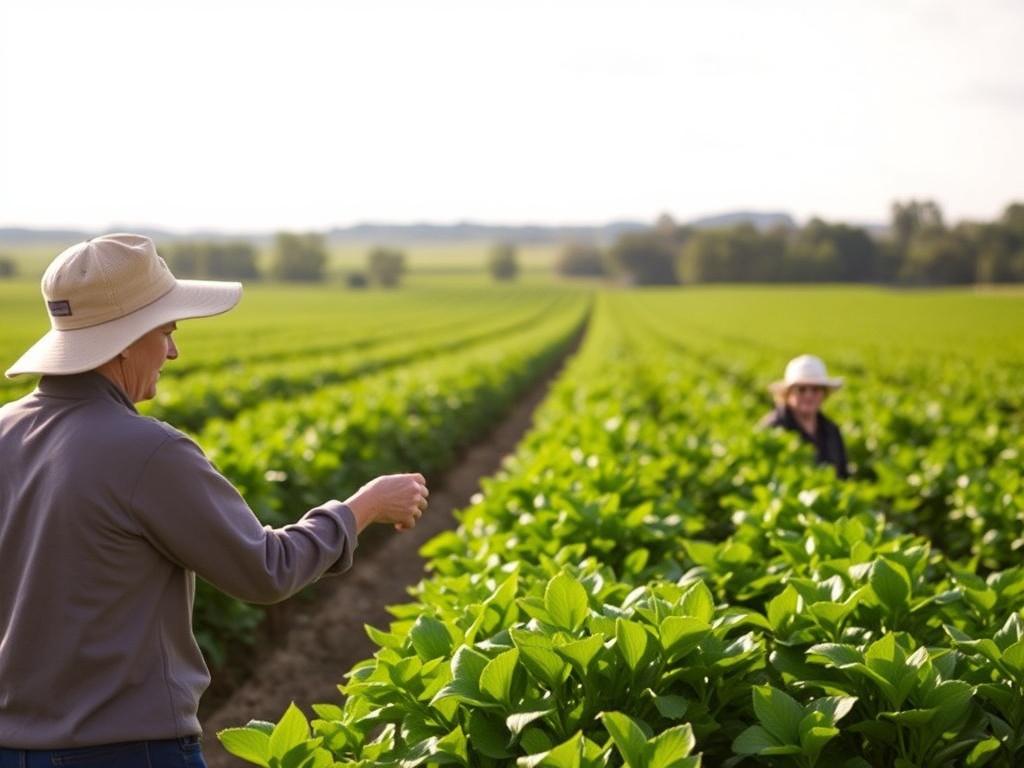
Finding and using public funds can change the trajectory of a farm business, but federal and state programs feel like a maze until you learn the patterns. This article walks through the fundamentals, the paperwork, the pitfalls, and practical strategies so you can make smarter choices and spend less time guessing. My aim is to give you clear steps, real examples from the field, and tools you can use next week to move an application forward.
Содержание
Why public funding matters for agriculture
Federal and state support underpins much of modern agriculture, from disaster relief to incentives for conservation and renewable energy. For many operations—especially small, beginning, and specialty producers—these programs provide capital they cannot access easily through commercial lenders. Understanding where money is intended to go helps you line up projects that match policy priorities rather than forcing a project to fit an inappropriate funding stream.
Beyond cash, many programs offer technical assistance, reduced-interest loans, and connections to markets or research partners. These non-cash resources often pay dividends by lowering long-term costs or improving productivity. The best applicants see grants and subsidies as tools in a broader strategy, not as a one-off rescue.
Grants versus subsidies: what’s the practical difference?
At a glance, grants and subsidies both put public dollars into agricultural businesses, but they behave differently. Grants are usually competitive or purpose-driven awards that require an application describing goals, budgets, and measurable outcomes, often with frequent reporting requirements.
Subsidies tend to be more predictable payments or supports tied to commodities, insurance, or compliance with program rules. Subsidies can be entitlement-style—if you meet eligibility criteria, you receive benefits—while grants typically require demonstrating added value or innovation. Knowing this distinction helps you match projects to the right funding pathway.
Quick comparison table
Feature
Grants
Subsidies
Purpose
Project or research funding, innovation, capacity building
Income support, price risk management, program compliance
At the federal level, USDA agencies are the primary sources: the Farm Service Agency (FSA), Natural Resources Conservation Service (NRCS), Rural Development (RD), Risk Management Agency (RMA), and the National Institute of Food and Agriculture (NIFA). Each has clearly different goals and application processes. State departments of agriculture, conservation districts, and regional rural development offices complement federal offerings with locally tailored programs.
Searchable resources include Grants.gov, USDA regional program pages, and state agriculture agency websites. Agricultural extension offices and local NRCS staff are underused but invaluable sources—these people can point you to current signups, local priorities, and even help with the paperwork. Make them your first call when you’re exploring options.
Common federal programs worth knowing
Some programs are frequently relevant across production types. NRCS conservation initiatives such as EQIP (Environmental Quality Incentives Program), CSP (Conservation Stewardship Program), and ACEP (Agricultural Conservation Easement Program) fund practices that improve soil, water, and habitat. These programs often come with technical assistance and cost-share arrangements that reduce up-front expense for on‑farm improvements.
For financial resilience, FSA administers farm loans, disaster assistance, and safety-net programs like ARC (Agricultural Risk Coverage) and PLC (Price Loss Coverage). RD offers grants and loans for renewable energy and business development—REAP (Rural Energy for America Program) and RBDG (Rural Business Development Grants) are two examples that support energy upgrades and value-added enterprises. On the research and innovation side, NIFA funds projects that link universities, producers, and industry partners.
Eligibility realities: who can apply and what’s required
Eligibility varies widely: some grants are open to individuals and for-profit farms, others are restricted to nonprofit organizations, cooperatives, or municipalities. Many programs include priority categories—beginning farmers, socially disadvantaged farmers, veterans, and limited-resource producers often receive preferential consideration. Read the eligibility language carefully; small differences (e.g., in gross income limits or active engagement criteria) can determine whether you apply or not.
Most federal grants require a registered entity with an Employer Identification Number (EIN) and active status in SAM.gov for federal awardees. Many state programs have additional requirements like proof of state residency, registration with state business services, or specific certifications (organic, GAPS, etc.). Getting these administrative ducks in a row before the deadline prevents last-minute disqualifications.
Active engagement and legal definitions
For commodity programs and some loan instruments, the farm operator must be “actively engaged” in farming by USDA definitions to receive payments. This typically means performing certain management or physical activities and having a share of the risk. Be prepared to document your role with leases, contracts, and time logs if asked. Clear recordkeeping here saves headaches during audits.
Additionally, payment limits and adjusted gross income (AGI) tests can bar high-income individuals from some subsidies. For many family farms, these thresholds are not binding, but it’s essential to calculate AGI and understand whether your household income will affect eligibility. When in doubt, consult the agency to avoid surprises during award processing.
Finding the right opportunity: strategy and timing
Successful applicants match a real business need to a funder’s policy objectives. That might mean timing a conservation project to an NRCS signup, or bundling a value‑added processing plan into an RBDG application with a clear market analysis. Look at program priorities from the agency’s perspective—if climate resilience or underserved producers are emphasized in the current fiscal year, frame your proposal around those topics when valid.
Timing matters: many programs have annual signups, while others open sporadically. Maintain a calendar of recurring deadlines for your region and subscribe to state and federal email lists. If you miss one cycle, use the intervening months to strengthen your proposal, gather partners, and collect baseline data so next time you apply with confidence.
Using partners to strengthen applications
Collaborative proposals often score higher than solo efforts because they leverage more resources and spread risk. Universities, extension offices, nonprofits, and local governments can provide matching funds, technical expertise, and credibility. For instance, pairing with a regional food hub or university researcher on a value‑added project demonstrates market access and measurement capacity.
Build partner agreements early—letters of support are more persuasive when they contain specific commitments (matching cash, technical assistance, or access to facilities). Treat partner outreach like a mini‑project: clarify deliverables, timelines, and communications so partners contribute meaningfully to the application and follow-through.
Application basics: read the announcement, then reverse engineer
Start by reading the grant announcement or program notice line by line. Identify mandatory attachments, evaluation criteria, scoring weights, and allowable costs. Then reverse engineer: if the scoring rubric rewards measurable environmental outcomes and community impact, allocate budget and staff time specifically to measure and document those outcomes.
Create a checklist from the solicitation and assign responsibilities and deadlines. Many applicants fail because they miss a required attachment, misinterpret the budget template, or submit late. Simple project management reduces those risks and improves your chance of receiving funding.
Preparing the project narrative
Write a concise project narrative that directly answers every evaluation criterion. Use subheadings that map to the scoring categories so reviewers can find evidence quickly. Quantify goals (e.g., acres restored, gallons of water saved, expected increase in revenue) and be realistic—overly optimistic claims erode credibility.
Include a clear work plan and timeline with milestones, responsibilities, and a monitoring plan. Funders want to see that you can implement and measure success, not just dream up ambitious ideas. Detail the who, what, when, and how; strong narratives connect operations-level activities to measurable outcomes.
Budgeting: allowable costs and matching contributions
Budgets are where many applications falter. Read the allowable and unallowable costs carefully—some programs explicitly prohibit using grant funds for salaries beyond certain levels, for land acquisition, or for general operating deficits. Include fringe benefits and indirect costs as allowed, and justify every line item with clear ties to the workplan.
Matching funds increase competitiveness and demonstrate local buy-in. Matches can be cash or in-kind, like donated labor or volunteer time, but must meet program rules. Document matching commitments in signed letters or budget tables—unspecified or unverifiable matches are treated as weak or nonexistent during review.
Documentation and registrations you’ll likely need
Federal awards commonly require active registration in SAM.gov, an EIN, a bank account for electronic funds transfer, and sometimes proof of non‑conviction for debarment and suspension. For nonprofit applicants, current 501(c)(3) documentation and audited financial statements may be requested. Having these documents ready shortens the gap between award notification and fund disbursement.
Many agencies also request farm-level documentation: acreage reports, crop insurance records, leases, proof of ownership, and tax returns. Keep up-to-date copies in a folder—paper and scanned—so you can transmit them quickly. In my experience, applications stalled only when a producer lacked timely proof of ownership or an updated crop report.
Managing awarded funds: setting up systems before money arrives
Winning a grant shifts the challenge from applying to executing. Set up an internal accounting system that segregates grant funds, records expenditures to budget line items, and timestamps all transactions. Use a separate ledger, cost centers, or project codes in your farm accounting software to avoid co-mingling funds with unrelated income.
Assign a project manager and a backup, and document roles in a simple responsibilities matrix. Regular check-ins—monthly or quarterly depending on the award timeline—keep the project on track and make it easier to compile reports. Don’t underestimate the labor required to comply with federal reporting; it’s often an ongoing task rather than a one-time report at the end.
Allowable cost principles and procurement
Grant rules typically require that costs be necessary, reasonable, allocable, and documented. When purchasing equipment or contracting services, follow procurement standards in the award terms; some contracts require competitive bids, three quotes, or adherence to Davis-Bacon wage requirements for construction. Track quotes, purchase orders, and invoices to demonstrate that you followed the rules.
Document any deviation from the original budget and request approvals in writing when necessary. Small changes may be allowed through a no-cost extension or an approved budget amendment, but undocumented adjustments can jeopardize future funding and generate audit findings. Plan contingency funds and communicate early with the grant officer when project realities shift.
Reporting, audits, and performance measurement
Reporting is not optional. Federal awards commonly require narrative progress reports, financial reports, and performance measures tied to the original goals. Set up data collection routines that capture baseline metrics at the start and track progress against milestones—this will make reporting far less painful and produce better outcomes for your business.
Be prepared for audits. Keep receipts, timesheets, matching documentation, and proof of procurement decisions for the period specified in the award terms—typically three to six years for federal grants. Auditors look for consistency between what you promised and what was delivered; clear documentation simplifies any review and protects your reputation for future funding.
Common pitfalls and how to avoid them
Applying to the wrong program is a frequent mistake. If your project doesn’t align with the funder’s objectives, no amount of polishing will win the award. Spend time matching objectives and be ruthless about walking away from mismatched opportunities. It’s better to submit three strong, well-targeted proposals than ten weak or unfocused ones.
Another recurring problem is underestimating administrative time. Producers assume farm labor covers grant tasks without accounting for the paperwork burden. Budget realistic labor hours for grant administration or contract a bookkeeper or grant manager if needed; the cost often pays for itself by keeping compliance clean and avoiding grant clawbacks.
Ethical and legal considerations
Be honest in applications; misrepresenting facts, inflating matches, or concealing conflicts of interest can lead to debarment and legal penalties. If your operation receives multiple forms of public support, ensure you understand stacking rules—some programs limit simultaneous use of certain funds for the same expense. When in doubt, ask the program officer for clarification in writing.
Transparency extends to environmental and labor practices. Programs that incentivize conservation often require compliance with environmental regulations and sometimes cultural resource reviews. Ignoring these obligations can halt a project and incur fines, so address potential regulatory hurdles in your planning phase.
Real-life examples from the field
Years ago I worked with a family-run vegetable farm that pursued an NRCS EQIP contract to install drip irrigation and transition to no-till practices. We spent three months collecting baseline soil tests, preparing a detailed workplan, and securing three competitive bids for installation. When the contract arrived, the farmer had the documentation in order and completed the work within the timeline, which made the inspection and final payment smooth.
That same farm later applied for REAP to add solar panels. The REAP application required detailed energy audits and cash-flow projections. Partnering with a trusted installer who provided an energy assessment made the proposal credible and the award was approved. The solar investment reduced energy costs and strengthened loan eligibility for other capital projects.
When to hire help: grant writers, accountants, and attorneys
Engaging a grant writer or consultant makes sense when the potential award is substantial relative to the fee or when your operation lacks time and expertise to craft a competitive proposal. Look for writers with agricultural experience and verifiable award histories. Ask for sample successful applications and references from past clients in similar program areas.
Accountants familiar with grant accounting are worth their weight in gold. They can set up project codes, ensure indirect costs are handled properly, and prepare for audits. Legal counsel is advisable when grants involve complicated contracts, land easements, or matching funds that trigger ownership changes. Invest in professionals strategically rather than broadly—choose help that fills real gaps.
Leveraging awards for long-term growth
Think beyond the immediate project: how will the funded activity change your business model, reduce costs, or open new markets? Use grants and subsidies to create durable assets—irrigation systems, processing equipment, market development, or improved soils—that generate returns beyond the grant period. Build sustainability into the project plan so the investment remains useful without continued subsidies.
Document results rigorously and publicize successes to strengthen future proposals. Agencies like to demonstrate impact, and a well-documented success story can be cited in future applications or used by partners to attract additional funding. Treat grants as pilot investments that prove concepts and scale the ones that work.
Policy trends and what they mean for applicants
Over recent years, federal priorities have shifted toward climate-smart agriculture, equity for underserved producers, and local food systems. Programs increasingly reward projects that sequester carbon, reduce greenhouse gas emissions, or restore habitat. If your project genuinely advances these goals, highlight the environmental benefits and measurement plans in your application.
Another trend is an emphasis on simplified, accessible application processes for historically underserved communities. Many agencies offer targeted funding pools, technical assistance, and lower administrative hurdles for beginning and socially disadvantaged farmers. Review program notices carefully for set-asides and special application help that may fit your situation.
State and local funding: often faster and more flexible
State departments of agriculture and county governments frequently offer smaller grants and cost-share programs with quicker turnaround times. These programs are often designed to meet local priorities—marketing regional products, supporting farmers’ markets, or funding on-farm food safety upgrades. Because competition can be less intense, local funds can be a pragmatic first step to test ideas or build capacity.
Don’t overlook conservation districts and regional planning agencies; they may administer small grants or technical assistance that pair well with federal funding. In my experience, combining a state cost‑share for fencing with an NRCS conservation contract streamlined implementation and reduced the need for matching cash from the farm.
Practical checklist before you submit
Confirm eligibility and priority status with the agency point of contact.
Gather entity documents: EIN, bank routing, SAM.gov registration, and proof of ownership or lease.
Prepare a realistic budget, include quotes, and document matching funds.
Create a clear timeline and assign responsibilities within your team.
Collect required attachments: maps, baseline data, letters of support, and résumés.
Proofread and align the narrative with scoring criteria; ask a third party to review.
Resources and tools to keep handy
Bookmark Grants.gov and the USDA program pages for FSA, NRCS, RD, RMA, and NIFA. Use your state department of agriculture site for local grants and subscribe to their newsletters. The Cooperative Extension and Small Business Development Centers offer workshops and one-on-one advising that can help with budgets, market research, and technical aspects of proposals.
For organizational readiness, set up a dedicated folder—digital and physical—with licenses, tax returns, equipment lists, and operational plans. Create templates for common documents: project narratives, budgets, and letters of support, so you can reuse and adapt them quickly. These small efficiencies pay off when multiple funding windows open in a season.
How to respond if your application is denied
Rejection is part of the process. Request reviewer feedback and read the evaluation carefully. Many agencies provide score sheets or narrative comments; these can pinpoint weaknesses to address in future submissions. Use the feedback to tighten objectives, improve metrics, or strengthen partnerships before reapplying.
If funds were denied due to technical errors, save the submission and correct the issue on the next cycle. If the denial was based on competitiveness, consider scaling the project down or pursuing smaller state-level funds to build a track record. Persistence combined with iterative improvement often leads to success.
Final thoughts on making public funds work for your farm
Public funding can accelerate farm transitions, reduce risk, and seed innovation, but it requires time, organization, and strategic thinking to harvest the benefits. Start small if you are new to applications, build a portfolio of awards and outcomes, and use those successes to qualify for larger investments. Think like a project manager: define outcomes, measure progress, and document everything carefully.
My practical advice: cultivate relationships with local agency staff, build small wins that demonstrate your management capacity, and be honest about what you can implement. With a clear plan and disciplined execution, grants and subsidies become predictable tools rather than mysterious prizes—tools that let you invest in resilience, productivity, and the future of your farm.