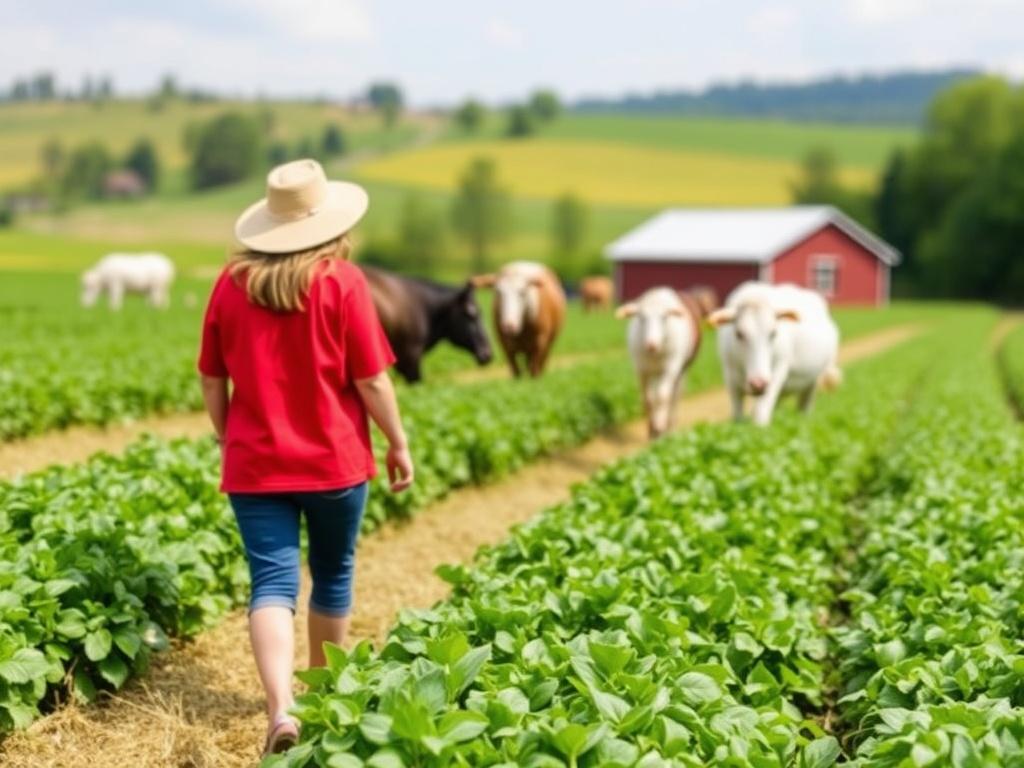
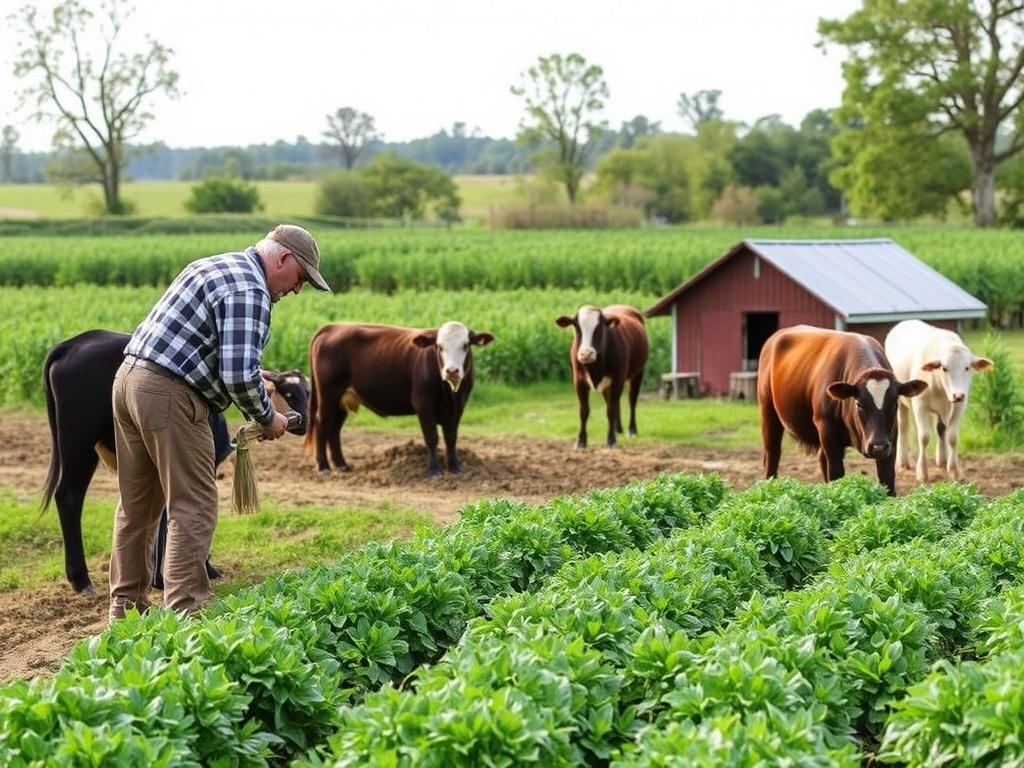
Farmers have always relied on one another — passing seeds, swapping advice, lending equipment, and trading labor. Today, as farms face climate uncertainty, market volatility, and rapid technological change, connecting with peers has grown from neighborly convenience into a strategic necessity. This article explores how deliberate networks and knowledge-sharing practices change livelihoods, sharpen resilience, and accelerate innovation across rural landscapes.
Содержание
Why farmer networks matter now more than ever
Climate shifts, pest pressures, and fluctuating commodity prices mean single solutions rarely last. When growers pool observations — like earlier emergence of pests or fading yields on a particular variety — they create a living dataset that guides faster responses. That collective intelligence helps everyone adapt more quickly than any single farm could on its own.
Market demands and regulatory requirements are also moving targets. Shared experience shortens the learning curve for certification, value-added processing, and direct-to-consumer marketing. Farmers who network gain quicker access to tested approaches for meeting new standards and finding niche buyers.
Networks reduce isolation, too, which has tangible benefits for mental health and decision-making. The simple act of talking through a problem with someone who’s been there reduces stress and reveals options you might not have come up with alone. In many places, strong social ties are what keep small farms viable across generations.
Forms of farmer networking: a spectrum from informal to institutional
Not all networking looks the same. At one end of the spectrum, there are casual neighbor-to-neighbor conversations over a fence. At the other end are formal cooperatives, research partnerships, and online platforms that connect thousands of members. Each form has its own strengths and trade-offs.
Informal networks excel at speed and trust. A phone call to the friend down the road often yields a quick fix: borrowing spray, advice about a new weed, or a heads-up about a problem on a local road. Formal networks, meanwhile, provide structure, funding options, and the capacity to pursue large-scale projects like shared processing facilities or regional pest surveillance.
Digital communities add reach and scale but require moderation and curation to stay useful. Facebook groups, WhatsApp threads, and specialized forums let growers exchange photos, ask urgent questions, and crowdsource recommendations across wider geographies. The best approaches often combine personal relationships with digital tools, balancing intimacy and scalability.
How knowledge sharing actually happens on farms
Knowledge transfer takes many forms: demonstration, apprenticeship, one-on-one mentoring, group workshops, farm visits, newsletters, and recorded webinars. Each method transmits different kinds of information — practical techniques, tacit know-how, or codified research findings — and benefits different learners.
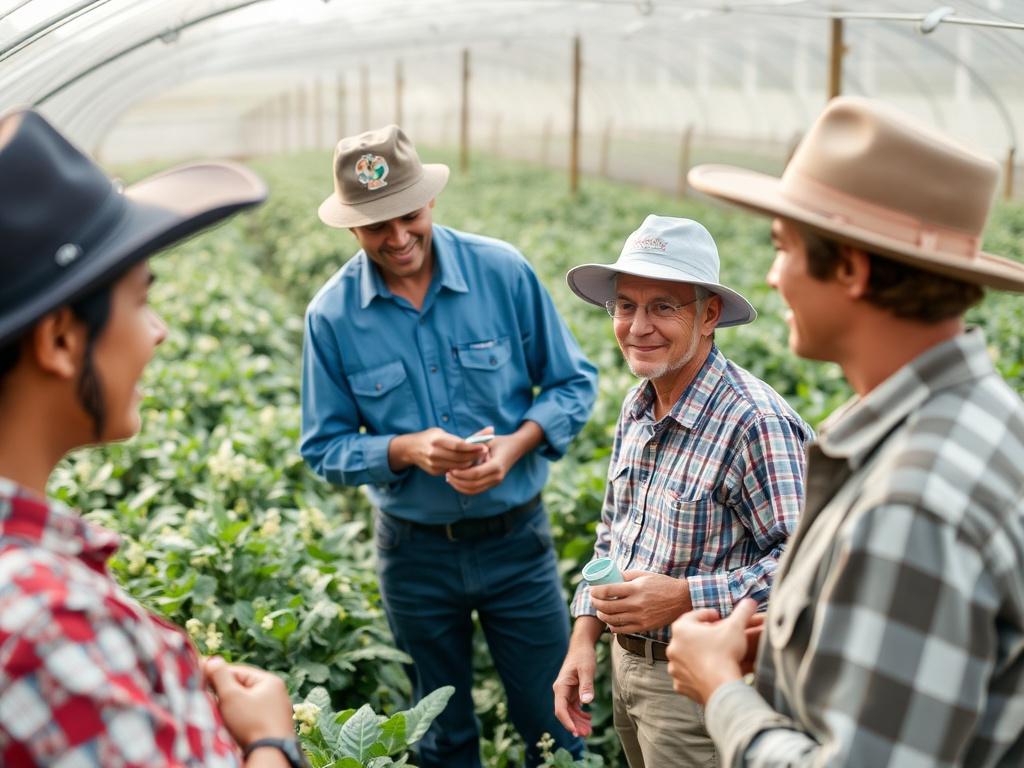
Hands-on demonstrations and field days are especially powerful because they show systems in context. Seeing how someone manages irrigation, builds soil, or sequences rotations turns abstract ideas into tangible steps you can replicate. Observational learning also embeds subtle details that are hard to capture in manuals.
Written guides and videos are valuable for standardization and scaling. They capture methods that farmers can revisit at their own pace. But these resources work best when paired with opportunities to ask questions and adapt the advice to local conditions.
Case study: a community-based pest monitoring network
In one Midwestern county, corn growers formed a volunteer scouting network after an invasive moth appeared. Members agreed to check a handful of fields each week and report findings to a shared spreadsheet. Early detection on one farm triggered a coordinated targeted spray across the area, limiting the moth’s spread and saving significant input costs.
This network started with three neighbors and a county extension agent. Within two years, it included more than 50 farms and contributed data for a regional pest management plan. The group’s success rested on simple agreements, clear reporting forms, and the mutual recognition that acting together was cheaper and more effective than reacting individually.
The project also produced unexpected benefits: participating farmers began swapping labor for harvest, coordinating equipment purchases, and discussing longer-term soil health practices. Once trust formed around one shared problem, other collaborations followed.
Building trust and reciprocity in farmer networks
Trust doesn’t emerge from a mission statement; it builds through small, repeated exchanges. Sharing a spare part, giving a timely tip, or honoring a promised seed sample all signal reliability. Those seemingly minor acts compound into a reputation that makes deeper collaboration possible.
Reciprocity matters because knowledge sharing is rarely equal. Some growers have more time, equipment, or technical skills than others. Networks that recognize different contributions — whether by access, expertise, or labor — avoid resentment. Explicit norms around giving and taking keep the system functioning.
Clear communication and simple governance help institutionalize reciprocity. A community might maintain a shared calendar for equipment rentals, track contributions to a seed bank, or create rotating roles so workload and benefits are distributed fairly and predictably.
Practical tools: platforms, formats, and facilitation techniques
Choosing the right tools depends on network goals and local contexts. For urgent problem-solving, private messaging apps are often best for quick exchanges. For archival knowledge and searchable resources, a simple website, a shared drive, or a newsletter works well. Some groups use a mix, keeping urgent chat for timeliness and curated resources for long-term reference.
Facilitation skills matter more than technology. Skilled facilitators ask clarifying questions, draw out quieter members, and document decisions. They create a safe space for admitting failures and for asking for help. Training one or two local facilitators can lift a whole network’s effectiveness.
Data collection tools deserve special attention. Low-tech surveys, smartphone apps for field notes, and standardized reporting templates all help turn anecdote into evidence. When farmers agree on what to track and how, their shared data becomes a powerful resource for problem-solving and grant applications.
Quick comparison: common tools and when to use them
The table below summarizes several networking tools, their best uses, and their limitations to help groups choose deliberately.
Tool
Best use
Limitations
Phone/WhatsApp
Fast troubleshooting; local coordination
Hard to archive; noise can overwhelm
Field days/farm tours
Hands-on demonstration and relationship building
Time-consuming; limited attendance
Shared spreadsheets/apps
Coordinated monitoring and pooled data
Requires agreed standards and data literacy
Cooperatives/CAFs
Collective marketing, processing, and input purchasing
Governance complexity; capital needs
Extension and university programs
Access to research, facilitation, and training
May be episodic; sometimes top-down
Starting a successful local network: step-by-step
Begin by identifying a narrow, shared problem that matters locally. When neighbors see immediate value — like coordinating grazing to reduce parasite loads or sharing irrigation scheduling — they’re more likely to join and sustain the effort. Narrow goals build momentum and clarify metrics for success.
Next, map the stakeholders. Include not just growers, but input suppliers, processors, extension agents, and community leaders. Diversity of perspective prevents blind spots and creates cross-sector support for initiatives that might need resources or permissions.
Set simple rules for participation. Agree on communication channels, data-sharing expectations, and decision processes. Keep governance lightweight to start; complexity can be added as the network grows and needs more formal structures.
Practical kickoff checklist
Identify a pilot issue with local relevance.
Invite a small, willing group for an initial meeting or farm visit.
Decide on a simple communication platform and a meeting rhythm.
Assign roles: coordinator, data keeper, outreach lead, etc.
Define success measures for the pilot and set a short review timeline.
Learning economies: how knowledge sharing reduces costs
Networks generate what economists call learning economies: the cost of innovation falls as more people adopt and improve a practice. When a farmer shares a new planting method, others try it and report back adjustments that improve yield or lower labor. The iterative process reduces experimentation costs for each participant.
Shared purchases and collective bargaining create direct financial savings. Groups can buy inputs in bulk, share expensive machinery through rental schedules, or co-invest in equipment like grain dryers or processing lines. Those savings can be redirected into soil health investments or marketing efforts.
Shared knowledge also reduces risk. Farmers who jointly test varieties or market channels split the downside of failures. This risk pooling encourages trial that leads to discovery of new opportunities otherwise too risky for an individual operation.
Social capital and non-monetary returns
Beyond dollar savings, networks create social capital — the trust and shared norms that make cooperation easier. Social capital pays returns in quicker problem-solving, more resilient local economies, and increased community well-being. These effects are less visible but critically important.
Networks also enable mentoring and succession planning. Younger farmers benefit from elders’ tacit knowledge about timing, market quirks, and on-farm creativity. Conversely, experienced farmers often welcome fresh ideas, new technologies, and energy from newer entrants, creating an intergenerational exchange that strengthens the whole region.
These non-monetary returns accumulate slowly but compound: a culture of sharing raises the information baseline for everyone, making future collaboration easier and more productive.
Digital networks: opportunities and pitfalls
Online groups have democratized access to information. A photo of an unfamiliar leaf spot sent to a regional forum can yield diagnosis and treatment options within hours. Digital platforms can also link farmers to researchers and buyers beyond their region, opening new markets and knowledge streams.
However, digital spaces have pitfalls. Misinformation spreads easily without moderation, and advice taken out of local context can do more harm than good. Platforms sometimes reward volume over quality, amplifying sensational but unverified stories while burying careful, evidence-based guidance.
Successful digital networks pair technology with curation: moderators verify posts, experts weigh in on contentious topics, and community standards encourage citation of credible sources. Blending online reach with local validation keeps information useful and trustworthy.
Organizing effective farm visits and field days
Field days should be purposeful, not just social. Plan an agenda with clear takeaways, including hands-on demonstrations, time for participant questions, and simple materials summarizing what was shown. When attendees can leave with a checklist or a short protocol, the day becomes an action plan rather than a photo op.
Choose hosts strategically. Rotate farms so different operations and scales are represented, and compensate hosts with honoraria or community support to recognize their time and investment. Limit group size where depth and conversation matter, or use break-out sessions for practical skill-building.
Follow-up is crucial. Share notes, videos, and contact lists after the event. A single field day can seed a longer-term learning cycle if participants reconvene to report on implementation and adjustments.
Scaling up: when a local network becomes a regional movement
Scaling requires governance that balances local autonomy with the benefits of coordination. Regional networks can standardize monitoring protocols, aggregate market volumes for better negotiating power, and leverage shared data to attract public and private investment. But scaling also risks diluting local relevance if decision-making moves too far from frontline growers.
Successful regional expansions often use federated models: local groups remain self-governing while participating in a larger umbrella organization that provides services like marketing, training, or data management. This structure keeps problem-solving local while capturing economies of scale for services that benefit from centralization.
Funding matters as networks grow. Grants and cooperative loans can help build assets and pay coordination staff. Transparent financial management and clear value propositions make it easier to attract and retain members as networks move beyond informal arrangements.
Real-life example: a cooperative that grew from a coffee table
Years ago I attended a potluck where a handful of vegetable growers complained about shrinking margins and unpredictable buyers. They started by pooling a few crates of produce and selling at a new farmers market together. That small collaboration formalized into a cooperative that now handles distribution to restaurants, negotiates bulk seed purchases, and operates a shared cold-storage trailer.
The cooperative’s success came from incremental wins: early profits were modest, but trust and clear accounting built momentum. Members instituted rotating shifts for packing and transparent pricing that rewarded quality. Today the cooperative supports new farmers with mentorship and helps members meet local school and hospital contract requirements they never could as individuals.
That story shows how practical problem-solving and social cohesion can evolve into institutional capacity that reshapes regional food systems.
Overcoming barriers: common challenges and solutions
Time scarcity is the top barrier for many growers. Scheduling meetings around planting and harvest requires creativity: shorter meetings, synchronous tools like brief recorded updates, and asynchronous decision-making reduce the time burden while keeping momentum. Compensation for participation — stipends, shared labor swaps, or in-kind services — also helps.
Trust issues often stem from past negative experiences or competition. Begin with low-stakes projects to build confidence before tackling costlier collaborations. Neutral facilitators, transparent bookkeeping, and written agreements can ease fears and set expectations.
Differences in scale and resource levels can create power imbalances. Address this with deliberate role design and decision rules that protect minority voices. Small farms can be given equal votes in governance structures, or technical assistance can be subsidized for less-resourced members to level the playing field.
Legal and financial considerations
Formal collaboration can trigger legal and tax questions. Cooperatives, LLCs, and producer associations each have different implications for liability, profit distribution, and regulatory compliance. Consulting an attorney with agricultural experience early in the process prevents costly missteps later.
Financial transparency builds trust and supports sustainability. Simple bookkeeping, annual budgets, and clear cost-sharing formulas prevent misunderstandings. Many groups use straightforward accounting templates and involve members in periodic reviews to maintain collective ownership of finances.
Insurance and liability issues matter when sharing equipment or hosting public events. Adequate coverage and clear waivers protect both hosts and participants. Make these requirements part of planning rather than an afterthought.
Incentives and policies that support farmer collaboration
Public policy can catalyze or hinder farmer networking. Grant programs that fund collaborative projects, subsidize shared infrastructure, or support cooperative development reduce upfront barriers and accelerate impact. Conversely, regulations that assume individual ownership or make cooperative taxation challenging can stifle collective action.
Extension services, when resourced and oriented toward facilitation rather than just information transfer, become vital network builders. Funding for extension positions focused on farmer-led networks yields outsized returns by mobilizing local knowledge and creating durable social infrastructure.
Policymakers can further support networks by simplifying procurement rules so schools and institutions can buy from local farmer groups, and by offering tax incentives for shared investment in community processing hubs and storage facilities.
Measuring impact: what success looks like
Impact measurement should be pragmatic. Trackable metrics include input cost savings, yield stability, new markets accessed, and the number of collaborative projects launched. Qualitative indicators — such as reported confidence in decision-making or the number of peer-to-peer consultations — reveal changes in social capital that numbers alone miss.
Start with simple baseline data and set short evaluation cycles. Quarterly check-ins that ask members what worked, what didn’t, and what they want to try next create a feedback loop that keeps the network responsive. Use both stories and statistics to make the case for scaling or additional funding.
Documenting failures is as important as documenting successes. Networks that openly analyze what went wrong develop institutional memory that prevents repeated mistakes and improves future experimentation.
Equity and inclusivity: making sure networks serve everyone
Networks that mirror existing social hierarchies perpetuate inequity. Intentionally invite and support underrepresented groups — women, beginning farmers, people of color, and landless laborers — by offering meeting times that consider caregiving responsibilities, providing childcare stipends, and ensuring language access where needed.
Mentorship programs and sliding-scale membership fees help include those with fewer resources. When networks proactively lower barriers to entry, they benefit from a wider range of perspectives and strengthen community resilience.
Inclusive governance structures, such as reserved seats or rotating leadership, help maintain representation over time. Regular climate checks — anonymous surveys or facilitated listening sessions — reveal whose voices are absent and what adjustments are necessary.
Innovation happens faster when farmers learn together
Shared experimentation accelerates innovation because each participant contributes tweaks and observations that refine a practice. Whether it’s cover cropping mixes, rotational grazing patterns, or low-cost greenhouse systems, collective iteration shortens the time from idea to robust, context-appropriate technique.
Networks also bridge science and practice. Researchers gain access to field sites and real-world conditions, while farmers access trials and data that have been tested beyond the university plot. Co-created research agendas ensure experiments answer practical questions and increase adoption rates of successful practices.
The convergence of farmer innovation with technology — sensors, apps, and remote sensing — becomes exponentially more valuable with shared data. When farmers pool sensor outputs or field observations, they detect patterns that single farms cannot, enabling proactive management at scale.
Best practices: norms and etiquette for effective sharing
Respect confidentiality when it’s requested. Not every farmer wants every detail public, especially regarding proprietary varieties, pricing strategies, or financial figures. Agree on what is public and what remains shared within a trusted subset of the group.
Give credit where it’s due. Acknowledge the source of an idea or technique and, when appropriate, offer to share costs for materials or licensing. Simple recognition fosters continued generosity and discourages appropriation of someone else’s hard-earned innovation.
Be concise and clear when asking for help. Provide context, describe what you’ve already tried, and include specific questions. Clear requests attract clearer responses and respect other members’ time.
Tips for sustained engagement and avoiding burnout
Rotate responsibilities to prevent coordinator fatigue. Even a small task list divided among several people keeps any single member from shouldering the entire burden. Celebrate small wins publicly to keep morale high and visible.
Set realistic meeting cadences and stick to agendas that respect members’ time. Use standing items for urgent updates and create blocks for deeper conversations to avoid endlessly long meetings. Asynchronous communication tools reduce the pressure to attend every session live.
Encourage experimentation, but limit commitments. Short pilot projects with clear end points prevent overextension and free members to explore multiple ideas without long-term risk. Review pilots and scale what works, shelve what doesn’t, and learn from each attempt.
Funding and sustainability strategies
Diversify revenue streams to keep networks resilient. Membership dues, event fees, grants, and social enterprise ventures — such as collective marketing or on-farm processing — each contribute to operational stability. Relying on a single funding source creates vulnerability when priorities change.
Invest in a small paid coordinator when networks reach a size where volunteer time can’t keep up with administrative needs. A coordinator increases continuity, professionalizes grant applications, and frees volunteer leaders to focus on strategy and outreach.
Transparent budgeting and clear value propositions help justify membership fees. When farmers see concrete returns — lower input costs, new markets, or shared infrastructure — they’re more willing to invest in sustaining the network.
Learning from failure: real-world lessons
Not every network survives, and that’s instructive. One collaboration I observed collapsed when leaders neglected bookkeeping and members felt uncertain about finances. The lesson was clear: social goodwill cannot substitute for transparent management. Basic administrative systems are foundational, not optional.
Another network struggled because it tried to scale too quickly without replicable processes. Rapid expansion diluted the local focus and eroded trust. Successful scale-ups preserve local autonomy and invest in replicable templates rather than one-size-fits-all mandates.
Both cases underline the importance of starting small, documenting everything, and iterating based on feedback. Failure, if analyzed honestly, becomes the most valuable lesson a network can share.
Where to find partners and inspiration
Local extension services, farmer-led organizations, and community-supported agriculture groups are rich sources of potential partners. Attend regional conferences and farmer markets to meet peers and to observe what others are doing. These gatherings double as inspiration and recruitment opportunities.
Online platforms and listservs connect growers across geographies and time zones. Subscribe to newsletters from land-grant universities, agricultural NGOs, and successful cooperatives to stay abreast of innovations and funding opportunities. Curate your feed to prioritize practical, actionable content.
Look beyond agriculture for ideas as well: cooperative development in other sectors, community organizing tactics, and open-source software communities all offer transferable lessons about governance, collaboration, and sustaining volunteer energy.
One practical plan to try next season
Pick one pressing problem on your farm or in your neighborhood that likely affects others — for example, managing a common weed, reducing post-harvest loss, or diversifying sales channels. Invite five to ten neighbors for a half-day farm visit and a focused workshop to exchange experiences and try a small coordinated experiment.
Agree on one simple data point to track and a four-week schedule for monitoring. Use photos and short field notes shared in a group chat to document progress. At the end of the pilot, convene for a results-sharing session and discuss whether the activity should continue, scale, or pivot.
This low-cost, low-risk approach builds relationships, yields quick learning, and models the cycle of experiment, evaluate, and adapt that underpins durable farmer networks.
Bringing it together: the ongoing value of sharing
Growing food is inherently social work: it depends on the weather, pollinators, markets, and a chain of trust that links producer to eater. Networks formalize and accelerate the social processes that have always sustained agriculture. By sharing knowledge, farmers amplify their capacity to solve problems, seize opportunities, and build farms that last.
Whether through a neighborly chat, a cooperative, a digital forum, or a regional network, the underlying principle is the same: we learn faster and endure longer when we share. Invest in relationships, document your experiments, and keep your circle open to new voices — those are the simplest, most reliable strategies for collective success.
Start small, be deliberate, and let practical problem-solving guide your growth. Over time, the habit of sharing turns individual knowledge into community resilience, and that collective intelligence becomes one of a region’s most valuable assets.