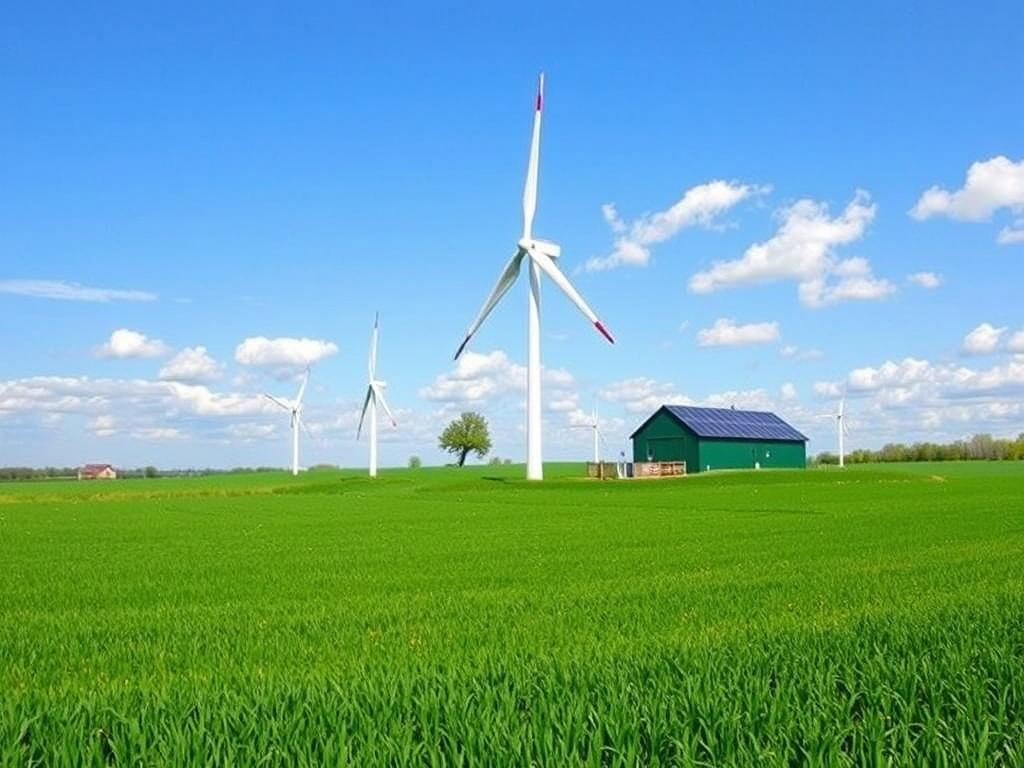
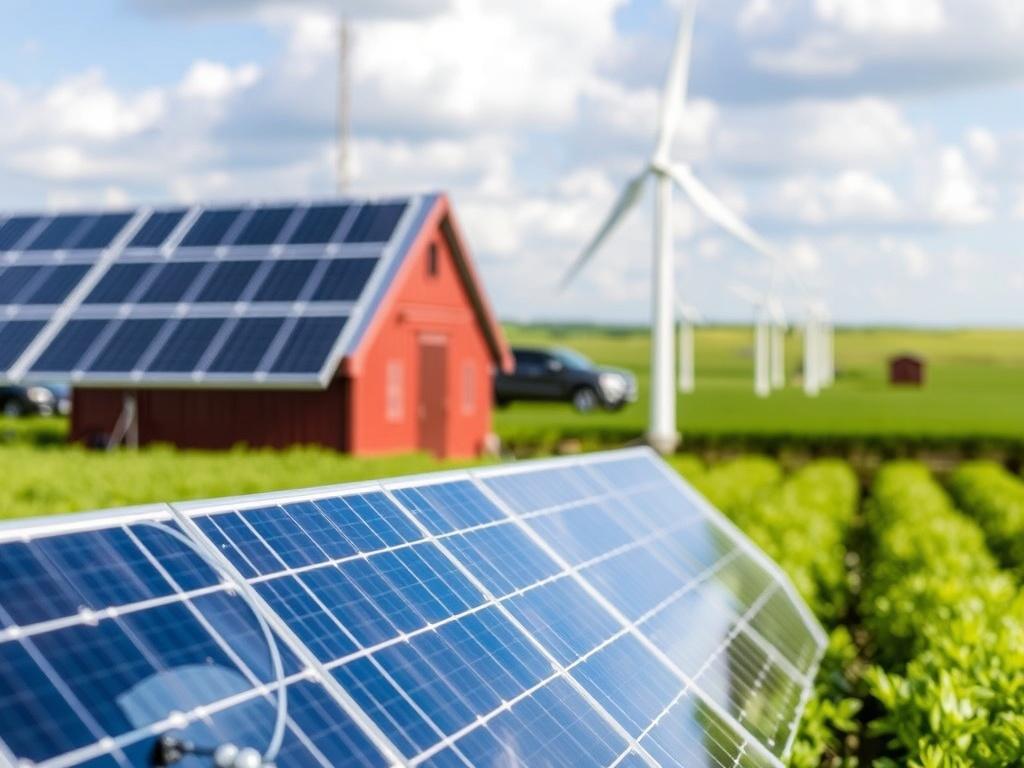
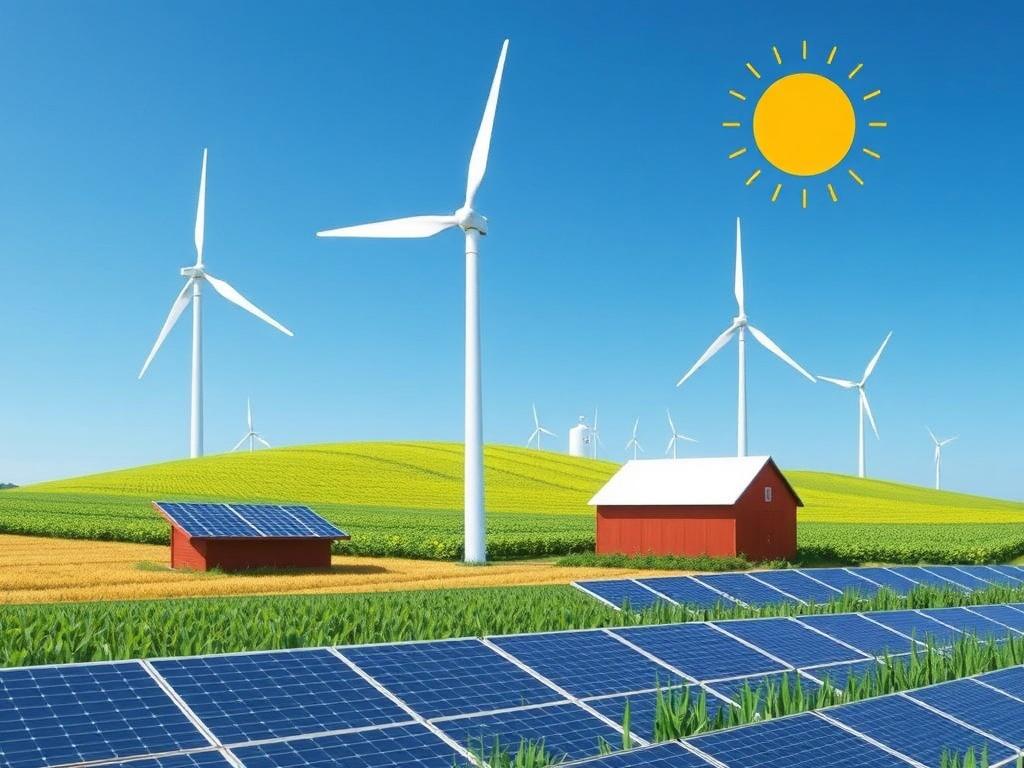
Farms today face a quiet revolution: the tools that power tractors, barns, greenhouses, and irrigation are shifting from a simple utility bill line item into a strategic asset. Energy Efficiency on the Farm: Solar, Wind, and Biofuels is not just a checklist of technologies; it’s a mindset about making every kilowatt and BTU count. This article walks through the technologies, the numbers, the policies, and the hands-on choices farmers need to make to lower costs, increase resilience, and reduce environmental impact.
Содержание
Why energy efficiency matters more than ever
Rising fuel costs, tighter margins, and the increased frequency of extreme weather are forcing farm operators to look past traditional energy planning. Energy efficiency reduces consumption first, which often gives a better return than installing new generation without changing how energy is used. Saving a kilowatt-hour through efficiency measures is typically cheaper and quicker than generating that same kilowatt-hour on-site.
Beyond dollars and cents, energy choices affect operational resilience. A farm with battery-backed solar or a backup generator powered by biodiesel can keep feed lines, refrigeration, and milking systems running during grid outages. That capability directly protects livestock welfare and the quality of perishable commodities.
Finally, environmental stewardship and market signals matter. Many buyers, processors, and retailers now require or reward lower-carbon products, and energy practices on the farm are a straightforward place to demonstrate improvements. Investing in efficiency and renewable energy can open new revenue channels and improve long-term market competitiveness.
Start with the basics: auditing energy use
Before picking technologies, you need to know where the energy goes. A targeted energy audit breaks down consumption by equipment, operation, and time of day—irrigation pumps, refrigeration compressors, lighting, and heating often dominate. Accurate data lets you prioritize measures that save the most energy for the least cost.
Audit methods range from a walk-through inspection and utility bill analysis to submetering and thermal imaging. Submetering critical circuits—like milk cooling, grain drying, or greenhouse heating—can reveal surprising peaks and waste. Time-of-use data also helps determine whether battery storage or demand management could save money by shifting loads away from peak pricing.
Many utilities, extension services, and agricultural engineering programs offer audit support or rebates for energy assessments. That first step usually pays for itself by revealing low-cost fixes—insulation, tune-ups, and control improvements—before any capital-intensive renewable installations are considered.
Solar power on the farm
Solar photovoltaic (PV) systems are now a familiar sight on rural rooftops and in unused acreage beside fields. Falling panel prices and improved inverter technology have made solar an accessible option for farms of widely varying sizes. The core appeal is predictable on-site generation that offsets diesel or grid consumption during daylight hours.
Solar works especially well for farms with daytime loads such as ventilation fans, pumping, and milking operations. When paired with battery storage, solar can also supply early-morning or evening loads, increasing self-consumption and resilience. Proper sizing aligns generation with critical load windows and available roof or ground space.
Choosing between rooftop and ground-mounted PV requires balancing cost, land use, and operational impacts. Rooftop arrays avoid using productive land but may be constrained by orientation, shading, or roof condition. Ground-mounted systems offer better tilt and accessibility but must be sited to minimize interference with field operations and crop rotations.
Technical decisions: panels, inverters, and siting
Panel efficiency and warranty length are often the first specs advisors discuss, but the inverter and system design matter just as much. String inverters are economical for uniform arrays, whereas microinverters or power optimizers improve production where shading or variable orientations occur. Choose components with proven reliability and clear service pathways.
Siting determines yield. South-facing arrays with minimal shading maximize output in the continental U.S., but the ideal tilt depends on seasonal load patterns—steeper tilts favor winter generation, while shallower tilts favor summer. Ground-mounted arrays should maintain access corridors for machinery and not disrupt tile drainage or irrigation infrastructure.
Commissioning and performance checks after installation are vital. A well-installed PV system should come with documentation for expected production and a plan for monitoring. Remote monitoring portals let farmers and integrators spot underperformance quickly and ensure panels are free of soiling, bird droppings, or damage.
Battery storage and microgrid options
Batteries extend the value of solar by shifting energy to match demand or providing backup power during outages. Lithium-ion batteries dominate for farm applications because of energy density and falling costs, but other chemistries and flow batteries may suit specific long-duration needs. Proper sizing considers discharge depth, cycle life, and the economics of time-of-use rates.
Microgrids combine local generation, storage, and control systems to island critical loads during grid failures. A microgrid controller can manage priorities—keeping milk cooling and ventilation online while shedding less critical circuits. The controller’s role is as important as the hardware; intelligent dispatch increases system life and operational savings.
Financing batteries can be a hurdle, but grants and incentive programs increasingly support storage when paired with renewables. Leasing, power-purchase agreements (PPAs), and shared ownership models also lower upfront costs and reduce risk for farm operators hesitant to take on capital-intensive equipment.
Wind energy: making use of the breeze
Wind turbines have powered farms for generations, starting with simple mechanical pumps and now moving into electrical generation at very different scales. Modern small and mid-sized turbines can serve remote pumps, barns, and farmstead loads, while larger turbines feed significant amounts of energy back to a farm or the grid. Wind resource assessment is the critical first step.
Assessing wind involves installing anemometers to collect one-year or multi-season datasets; shorter measurements can misrepresent resource variability. Turbine selection aligns with the farm’s energy profile—small turbines produce best where average wind speeds exceed roughly 7-8 miles per hour at hub height, while utility-scale turbines need higher, consistent wind.
Placement and height matter more for wind than for solar. Turbines produce more energy with higher hub heights because wind speeds typically increase with elevation and turbulence drops. Avoid placing turbines near buildings or trees that cause turbulence, and ensure setbacks satisfy local zoning and noise requirements.
Small turbines versus community or utility-scale projects
Small turbines—often under 100 kW—fit farmsteads and can offset on-site use, but their economics are heavily site-specific. Maintenance, permitting, and the relative value of displaced electricity must be considered. For some farms, joining a community wind project or hosting a larger turbine that sells power to the grid offers better returns.
Community wind projects aggregate wind resource and capital across multiple participants, reducing per-farm risk while providing local ownership. Hosting utility-scale machines may bring lease income and local benefits, but it also requires negotiation over land use, access roads, and decommissioning responsibilities. Clear contractual terms protect long-term interests.
Be mindful of non-energy impacts such as shadow flicker, avian risk, and landscape changes. These concerns are manageable with proper siting and operational curtailment strategies, but transparent community engagement early on avoids conflict later in the project lifecycle.
Biofuels and biomass: turning farm residues into energy
Bioenergy taps a resource farms already produce—manure, crop residues, and dedicated energy crops—to generate heat, electricity, or liquid fuels. The forms range from straight-burning biomass boilers to anaerobic digesters producing biogas that can be used for on-site heat, electricity, or upgraded to renewable natural gas. Matching feedstock to technology is essential for economic viability.
Anaerobic digesters are common on dairy and hog farms because manure is a continuous, high-volume feedstock that produces methane under controlled conditions. Digesters reduce odor, lower methane emissions, and create a nutrient-rich digestate useful as fertilizer. However, they require skilled operation and reliable waste handling.
Biofuels such as biodiesel and ethanol can be produced on-farm at small scales for internal use, but regulatory compliance, fueling infrastructure, and feedstock logistics must be managed carefully. Using waste vegetable oil or producing on-site biodiesel for tractors can reduce reliance on diesel, but fuel quality and storage are operational risks to address.
Feedstock logistics and supply chains
Feedstock availability defines how large a bioenergy system can be. Crop residues vary in moisture and consistency, while manure logistics involve storage, collection, and contamination control. A realistic inventory and seasonal schedule avoid underfeeding digesters or creating excess residue that cannot be processed.
Some farms choose dedicated energy crops like switchgrass or miscanthus to supply biomass boilers or co-fire with other fuels. These crops provide predictable yields but sacrifice land that might otherwise produce food or feed. Life-cycle analysis helps decide whether dedicated energy crops make sense for a particular operation.
When considering feedstock, account for competing uses and environmental consequences. Removing too much crop residue can increase erosion and reduce soil carbon, so sustainable residue management is a core design consideration. Integrated planning ensures energy crops or residue use align with soil health goals.
Integrating systems: hybrid approaches and controls
No single technology is a silver bullet; hybrid systems often deliver the best combination of cost, reliability, and carbon reduction. Solar paired with batteries addresses daytime and evening needs, while a biogas generator can supply baseload power and fuel long-duration storage. Smart controls knit these elements into a coherent system.
Load management and demand response strategies reduce the need for oversized generation. Automated controls can time grain drying or irrigation to coincide with peak renewable output, while thermal storage captures excess energy for later heating needs. In this way, operational changes amplify the value of new hardware investments.
Interoperability and simple interfaces matter. Farmers are not power system engineers; control platforms should present clear choices, support remote monitoring, and allow manual override. Field-tested software and service contracts ease adoption and keep systems producing as expected.
Economics and financing: how to make the numbers work
Project economics depend on many variables: energy prices, available incentives, capital costs, maintenance, and the farm’s ability to value on-site generation. A simple payback period ignores long-term benefits like price stability, avoided outages, and potential revenue from renewable energy credits or net metering. A more complete financial model includes these factors.
Available incentives—federal tax credits, state rebates, grant programs, and utility offers—can dramatically change the business case. The federal Investment Tax Credit (ITC) historically supported solar and could apply to paired storage, while state-level programs may reward biogas projects or provide low-interest loans. Program rules change, so staying current is essential.
Alternative ownership models reduce upfront capital needs. Power purchase agreements, leases, and third-party ownership let farms access renewables without bearing full construction risk. Conversely, ownership captures tax benefits and long-term savings but requires capital and administrative capacity to manage the asset.
Simple cost comparison table
The following table compares typical attributes of solar, wind, and on-farm biogas systems to help frame decisions. Values are illustrative and will vary by site, but the table highlights the main tradeoffs to consider.
Technology
Typical scale
Capital cost per kW (approx.)
Best use case
Operational considerations
Solar PV
1 kW – several MW
$800–$2,000
Daytime loads, roofs, unused land
Low maintenance, performance monitoring
Wind (small)
1 kW – 100 kW
$1,500–$4,000
Sites with steady winds, remote pumps
Height and siting critical; maintenance periodic
Anaerobic digester
50 kW – several MW
$3,000–$10,000 per kW
Dairies and livestock operations
Complex operations, digestate handling
Permits, regulations, and incentives
Local zoning, utility interconnection rules, and environmental permits shape what projects are possible. Rooftop solar often faces fewer hurdles, but ground-mounted arrays, wind turbines, and digesters typically trigger reviews. Early conversations with planning boards and utilities prevent delays and redesign costs.
Interconnection agreements can be lengthy and involve technical studies that uncover necessary upgrades to distribution lines or protective relays. These upgrade costs can be significant and should be estimated early in the planning stage. Working with an experienced installer familiar with local utility processes saves time and money.
Incentive programs move quickly. Grants and tax credit eligibility can depend on project timing, ownership structure, and technology mix. Always verify program details and plan for the administrative work needed to capture incentives, including documentation of equipment specifications and construction timelines.
Implementation: a practical step-by-step checklist
Breaking a project into manageable steps reduces risk and keeps timelines realistic. Below is a practical sequence that reflects common practice on farms and the advice I give when helping operators move from idea to operating system.
Conduct an energy audit and identify priority loads.
Assess site resources: solar insolation, wind measurements, feedstock inventory.
Engage designers and get preliminary system sizing and cost estimates.
Check local zoning, interconnection rules, and incentive programs.
Choose ownership and financing models, then secure quotes and contracts.
Install, commission, and set up monitoring with performance guarantees.
Train staff, set up maintenance plans, and review results periodically.
Each step involves documentation and decision points where farm owners weigh tradeoffs. Expect to iterate on system size and controls as new information emerges from metering or changing farm operations. A phased approach—starting with efficiency and solar, adding storage or biogas later—often balances capital and operational learning.
Case studies and real-life examples
I’ve spent time on farms where small changes produced outsized benefits. On a mixed vegetable farm in the Midwest, upgrading irrigation pumps and controls reduced energy use by 30 percent, which allowed a modest rooftop solar installation to cover a larger fraction of remaining demand. The farmer saw immediate savings that funded further investments.
On a Northeast dairy I visited, a mid-scale digester turned manure and whey into electricity and hot water. The project required careful coordination with the milk processor and local regulator, but once operational it stabilized on-site energy costs and reduced odor complaints. It wasn’t a quick win, but it delivered multiple operational benefits.
In another example, a farmer installed a solar canopy over a manure storage area, solving two problems at once: the canopy reduced heat gain and odor emissions and provided shade-cradled electricity for a nearby milking parlor. These sorts of combined solutions—where energy infrastructure addresses other on-farm needs—often produce better returns than single-purpose systems.
Operation and maintenance: keeping systems productive
Renewable systems are not “fit and forget.” Regular maintenance extends equipment life and preserves performance. For solar, that means cleaning panels where dust or bird droppings reduce output, checking inverters, and monitoring performance anomalies.
Wind turbines require periodic gearbox checks, blade inspections, and, for larger machines, scheduled component replacements. Early detection of wear prevents catastrophic failures and expensive downtime. For digesters, routine testing of feedstock consistency, temperature, and gas quality keeps the biological process stable.
Service agreements simplify maintenance planning. A good contract defines response times for faults, regular inspection schedules, and replacement parts policies. For busy farm operators, outsourced maintenance avoids costly mistakes and frees time for core farm work.
Common pitfalls and how to avoid them
One frequent mistake is oversizing generation relative to on-site consumption without a plan to export or use the excess. Excess generation that cannot be dispatched or sold may sit idle, reducing the project’s financial return. Aim for a realistic match between generation and the farm’s load profile.
Another trap is ignoring non-energy constraints like site access, future farm expansion, or conflicts with drainage tiles and irrigation lines. These oversights can lead to expensive rework or project delays. A site survey and simple map review catch many of these issues early.
Lastly, failing to plan for operations—who will monitor the system, how alarms are handled, and who arranges repairs—creates hidden costs. Assign clear responsibilities and document procedures during commissioning so that equipment continues to deliver expected benefits year after year.
Measuring success: metrics that matter
Track energy metrics that reflect both technical performance and financial outcomes. Key metrics include kilowatt-hours produced or saved, percentage of on-site load met by renewables, fuel displaced, and dollars saved on energy bills. Monitoring over time reveals degradation, behavioral drift, or opportunities for further savings.
Carbon metrics increasingly matter to buyers and regulators. Calculate avoided CO2e using accepted conversion factors for grid electricity and fossil fuels. For biogas projects, account for both methane capture and emissions associated with feedstock transport and digestate handling to produce an honest life-cycle assessment.
Set realistic benchmarks and update them as operations change. Annual reviews tied to weather and production data help isolate system performance from external variability and support continuous improvement. Consistent recordkeeping turns energy systems from a black box into a managed asset.
Policy, markets, and the role of cooperatives
Public policy and market design shape which projects are attractive. Renewable portfolio standards, net metering rules, and carbon markets influence project revenue streams and payback timelines. Keeping up with policy shifts and engaging in utility planning processes helps farmers benefit from new programs.
Cooperatives—electric co-ops, buying groups, and producer associations—play a meaningful role in aggregating resources and purchasing power. Co-ops can negotiate better rates, offer group financing, and host community-scale projects that individual farms could not support alone. Participation in these structures reduces transaction costs and spreads risk.
Farmers can also pursue marketing advantages by certifying renewable or low-carbon production. Traceability and certification programs reward farms that can demonstrate reduced emissions from energy and fuel use, opening doors to premium markets or supply chain partnerships.
Financing structures and tax implications
Ownership versus third-party financing has tax and cashflow implications. Owning equipment lets a farm capture tax credits and depreciation advantages, but it requires capital and administrative capacity. Third-party ownership shifts tax benefits to the provider but lowers initial outlays and simplifies operations.
Look for blended financing that mixes grants, low-interest loans, and private capital. Farm-focused lenders and green banks increasingly offer products tailored to agriculture, with terms recognizing the seasonal cashflow of farm businesses. Taking time to compare structures can change the project’s bottom line substantially.
Consult a tax professional early. Incentives like the ITC or accelerated depreciation have specific eligibility rules, and the value of tax credits depends on your tax position. Understanding how incentives stack and the paperwork required ensures the farm captures what it’s entitled to.
Scaling up: when and how to expand
Start with pilot or modular systems when possible to de-risk projects and build experience. A small solar installation with monitoring teaches operational patterns and pays for itself faster than a large, untested deployment. Once staff are comfortable, expand in phases aligned with cashflow and production growth.
Scaling often reveals unexpected synergies. For instance, an initial solar installation might prompt investments in high-efficiency cooling or grain dryers that further reduce energy use and improve the economics of a second-phase installation. Think of projects as cumulative improvements, not one-time fixes.
Document lessons learned during each phase and adjust operations accordingly. Scaling is as much organizational as technical: ensuring staff training, upkeep practices, and monitoring procedures are in place prevents performance decline as the system grows.
Future trends and innovations to watch
Several technologies are poised to change farm energy economics in the coming years. Improved battery chemistries, lower-cost electrolyzers for green hydrogen, and compact modular reactors on the long horizon each offer different value propositions for farm-scale resilience and decarbonization. Keep an eye on demonstration projects relevant to agriculture.
Digital tools—AI-driven energy management, predictive maintenance, and better resource forecasting—will make hybrid systems easier to manage and more profitable. These tools translate raw data into actionable steps, such as when to charge batteries or run a digester at peak production. Monitoring platforms with agricultural-specific dashboards will reduce the technical burden on operators.
Policy evolution, particularly around carbon accounting and incentive alignment, will also matter. Programs that reward measured reductions in scope 1 and scope 2 emissions create direct economic incentives for the investments discussed here. Farms that develop measurement practices now will be better positioned for future market demands.
Final thoughts: practical choices for a productive future
Energy choices on the farm are an extension of good management: targeted audits, incremental investment, and attentive operation produce steady returns. Solar, wind, and biofuels each have a place in the toolbox, and the best projects combine technologies with smarter controls and behavioral changes to maximize value.
Start small, prioritize efficiency, and use data to guide larger investments. Work with trusted local advisors, leverage cooperative approaches where possible, and plan for long-term maintenance and monitoring. The effort pays off not only in lower bills but in a more resilient, competitive farm operation prepared for the uncertainties ahead.