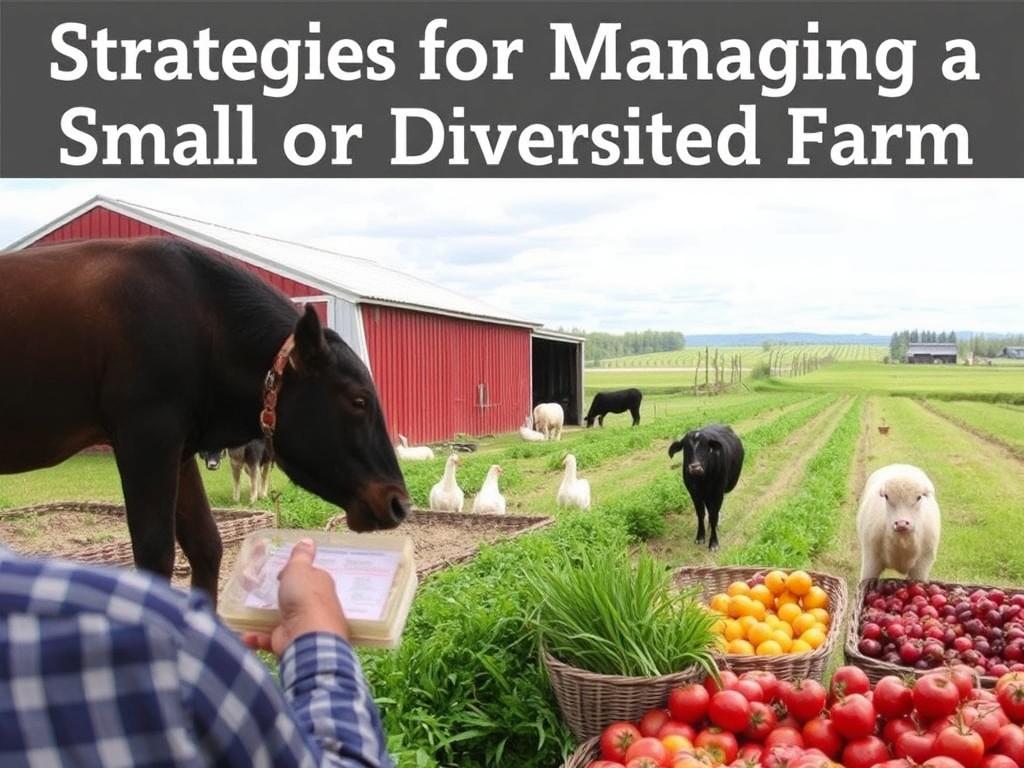
Running a small or diversified farm is equal parts art and arithmetic: you manage soil, animals, markets, and time with a constant eye on cash flow. The work requires nimbleness—shifting gears from planting to processing to marketing—and steady systems that keep that nimbleness productive rather than chaotic. This article lays out practical approaches you can adopt, adapt, and test on your land, whether you’re growing vegetables on two acres or juggling a handful of enterprises across a family farm.
Содержание
Understanding the small and diversified farm model
A small or diversified farm typically depends on multiple income streams rather than a single monoculture. That can mean vegetables, eggs, a little livestock, value-added products, occasional agritourism, or a mix of these; the point is spreading risk and finding synergies between enterprises.
Managing such a farm calls for a mindset that values flexibility and detailed recordkeeping. You’ll trade scale economies for responsiveness, so your strategies should prioritize high-value production, efficient use of labor, and tight cash-flow control.
Advantages and trade-offs of diversification
Diversification reduces vulnerability to a single market or a single pest problem. If one crop fails or a buyer disappears, other products can keep revenue flowing and give you breathing room to pivot.
On the flip side, diversification increases operational complexity. More products mean more inputs, different timing, varied regulatory requirements, and sometimes incompatible workflows. The trick is to diversify in ways that create complementarities rather than additional headaches.
When to stay specialized and when to diversify
Specialize if you can access a reliable market, have a comparative advantage, and can scale up without prohibitive capital costs. If you face unpredictable markets, limited acreage, or seasonal gaps in revenue, diversification becomes a practical insurance policy.
Decisions should be evidence-based: run small trials, track profitability per enterprise, and make changes incrementally. Thoughtful experimentation beats broad, unfocused expansion.
Setting clear goals and designing a business plan
A coherent plan converts hard work into a sustainable business. Define short-term targets around cash flow and production, and pair those with three- to five-year goals for growth, lifestyle, and succession.
Good planning doesn’t lock you into a rigid path; it clarifies trade-offs and gives you metrics to evaluate new opportunities. It helps you say yes to projects that move the business forward, and no to distractions that consume time without benefiting the bottom line.
Define measurable goals
Translate vague wishes like «make a living» into measurable goals such as target annual revenue, weekly hours worked, or acres devoted to each enterprise. Use numbers: projected sales, gross margin targets, and a cash cushion for lean months.
Revisit these goals quarterly. Farms change with markets and weather, so regular check-ins let you reallocate resources before problems compound.
Market research and product selection
Match production to realistic demand. Conduct local market research: visit farmers markets, talk to restaurateurs, and survey potential CSA members. Identify gaps—products customers want but can’t find—and think about how your offerings can fill them.
Where possible, prioritize products with strong gross margins per hour worked, since labor is often the limiting factor on small farms. Value-added processing and direct-to-consumer sales can increase margins if you can handle the extra complexity.
Financial planning: budgets, pricing, and cash flow
Create a simple annual budget that lists expected revenue and all expenses, including labor, seed, feed, utilities, equipment repairs, and marketing. Forecast cash flow monthly because agricultural income is often seasonal.
Price confidently: calculate cost per unit including labor, then add margin. When selling directly, factor in time for sales and fulfillment. Keep a reserve equal to two to six months of fixed costs to cover delays or crop failures.
Efficient land and resource management
Small acreage is an asset if managed intensively and intelligently. The goal is to maximize productive output per square foot while maintaining or improving soil health.
Efficient resource use lowers input costs and reduces risk. Build systems where outputs from one enterprise become inputs for another—manure to fertilize fields, spent greens for compost, or crop residues for mulch.
Soil health and crop rotation
Soil is the single most important asset on a farm. Focus on building organic matter through cover crops, compost, and reduced tillage where possible. Healthy soil retains water, supports resilient crops, and lowers fertilizer needs over time.
Design rotations that break pest and disease cycles, vary nutrient demands, and support continuous ground cover. Even on small plots, rotating families of crops and integrating legumes for nitrogen can yield big returns for fertility and pest management.
Water management and irrigation efficiency
Water is often expensive or scarce, so invest in efficient irrigation systems like drip lines and micro-sprinklers. These systems reduce water use, improve plant health, and reduce disease by keeping foliage dry.
Collect and store rain where feasible, and use mulch and cover crops to improve water infiltration. Meter your water use and address leaks promptly to avoid waste and surprise bills.
Pasture, livestock, and integration
Integrate livestock thoughtfully. On a small farm, rotational grazing can improve pasture productivity and soil health while providing manure and reducing feed costs. Match stocking rates to land carrying capacity to avoid overgrazing.
Keep clear protocols for animal health, record medicine and feeding, and plan sales or slaughter dates to align with pasture cycles. Integrated systems—chickens in orchards, sheep in cover crop fields—can multiply benefits when planned carefully.
Labor strategies and time management
Labor is often the most constrained resource on a small farm, and how you allocate it determines productivity. Treat labor planning with the same seriousness you give to crop schedules and cash flow.
Good systems, clear roles, and efficient processes make a small crew disproportionately productive. Invest in training and in tools that save time, and track where hours go to identify bottlenecks.
Hiring, delegation, and outsourcing
Decide which tasks are core to your identity and which can be outsourced. Contract processing, equipment repair, or book-keeping can free your time for production and strategy. When hiring, prioritize reliable work ethic and trainability over experience.
Create simple standard operating procedures for recurring tasks. Clear checklists mean new workers reach full productivity sooner, and quality remains consistent without constant supervision.
Daily routines and efficiency tactics
Design daily and weekly routines that group similar tasks to minimize transition time. For instance, block mornings for harvest and afternoons for packing or market prep to reduce equipment changes and movement across the farm.
Use time-blocking and a shared calendar if you have employees. Small investments in organization—labeled storage, staged packing areas, and fixed cleaning schedules—save hours every week.
Seasonal workload planning
Map the farm year on a calendar and identify peak workload weeks. These are the times when you’ll need additional hands, extra equipment, or simplified product offerings to avoid overload. Plan for seasonal spikes with temporary hires or by forming work swaps with neighboring farms.
Where possible, smooth income swings by offering winter products, value-added goods, or educational events during slower months. A steadier workload improves morale and decreases burnout.
Not all diversification is equal. The most sustainable options are those that share labor, infrastructure, or customers. Look for enterprises that piggyback on existing strengths rather than demanding entirely new skill sets or capital outlays.
Complementary enterprises can raise overall profitability and reduce risk, but each addition should be tested at small scale before full commitment.
High-value specialty crops and succession planning
Specialty crops like salad mixes, culinary herbs, or baby greens fit small acreages and fetch higher prices per square foot. They often require intense labor but can be profitable if combined with efficient harvesting and direct sales.
Plan succession and continuity as you introduce new enterprises. Teach your crew, document processes, and ensure your business is not tied solely to your unique skills if you intend to sell or pass the farm on.
Value-added products and processing
Turning raw produce into jam, pickles, baked goods, or cured meats increases margins and extends your selling season. Check local regulations early; processing can trigger food safety rules and inspection requirements.
Start small with limited runs and local sales to assess demand. Value-added work often requires a different rhythm and skillset, so consider partnering with a commercial kitchen or shared-use facility if available.
Agritourism, education, and service offerings
Agritourism—farm tours, workshops, pick-your-own events, or farm dinners—can diversify revenue and deepen customer relationships. These activities expose consumers to your story, which helps with branding and repeat business.
Begin with low-risk experiences like farm walks or small workshops before scaling up to larger events. Insurance, safety protocols, and clear communication about expectations are essential for public-facing activities.
Direct marketing, branding, and building customer relationships
Direct-to-consumer sales let you capture a higher share of the retail dollar, but they require work in marketing and fulfillment. Invest in clear messaging and consistent quality to build trust with customers.
Customers who understand your methods and mission are often willing to pay a premium and remain loyal through seasonal ups and downs. Your story is an asset—use it where it matters most.
Branding and storytelling
Develop a simple brand narrative that explains who you are, how you farm, and why customers should care. Authenticity matters—don’t overpromise. Use photos, farm notes, and regular communication to keep customers connected to the season.
Packaging and labeling should be clean and informative: product name, weight, price, and any certifications (organic, pasture-raised) are essentials. Consistency in presentation reinforces your brand and reduces customer confusion.
Online presence and e-commerce
A simple website with product lists, an events calendar, and contact info is often enough. For sales, consider platforms that fit your volume—an online store for preorders, or third-party platforms if you need order management support.
Leverage social media for storytelling rather than hard selling. Short, honest posts about what’s happening on the farm attract attention and build relationships without large advertising budgets.
Building local partnerships and wholesale channels
Work with restaurants, grocers, and food hubs that value local sourcing. Start with small, reliable deliveries and scale up as you consistently meet demand. Chefs often appreciate weekly availability and predictable quality more than huge volumes.
Consider co-ops or producer networks to reach larger buyers at scale while retaining your identity. Shared logistics can reduce individual transportation costs and open access to markets that are otherwise difficult for one small producer to serve.
Financial resilience: managing risk and cash flow
Cash flow volatility is the single biggest threat to small farms. Plan for it rather than react. That means conservative budgeting, diversified income timing, and quick access to short-term capital when needed.
Risk management should be layered: good recordkeeping, insurance where appropriate, and enterprise choices that balance high-reward with predictable returns.
Cost control and budgeting techniques
Track variable and fixed costs separately. Variable costs move with production—seed, fertilizer, and packaging—while fixed costs—mortgage, equipment payments, insurance—remain constant. Knowing both helps you set break-even prices per product.
Use basic accounting software or spreadsheets and reconcile bank accounts monthly. Small problems often reveal themselves in the numbers if you look frequently; don’t wait for tax time to realize a pattern of losses.
Insurance, contracts, and risk mitigation
Crop insurance and general liability policies deserve consideration depending on your crops and customer interaction. Read policies carefully; understand deductibles and covered perils before committing.
For wholesale and CSA relationships, use simple written agreements that state quantities, delivery windows, and payment terms. Clear expectations reduce disputes and protect cash flow.
Accessing capital: loans, grants, and alternative financing
Look for small-farm-friendly financing: microloans, community loan funds, and targeted agricultural lending programs. Grants can support specific projects—conservation practices, producer training—but rarely sustain operations.
Alternative financing like pre-sale programs, subscription models, or community-supported agriculture (CSA) shifts some market risk to customers and improves upfront cash flow. Use these tools when they match your customer base and operational capacity.
Technology and data-driven decision making
Technology doesn’t have to be expensive to be useful. Simple data collection and affordable tools can improve planning, reduce waste, and sharpen marketing efforts.
Start with measuring the basics—yield per bed, hours per task, and customer lifetime value—and use those figures to compare enterprises fairly.
Farm management software and recordkeeping
Choose software that matches farm complexity. At minimum, track plantings, sales, expenses, and labor hours. Over time, these records let you identify best-selling products and costly tasks to streamline.
Cloud-based tools allow remote access and backup, which is valuable if you have multiple hands or off-site bookkeeping. A little structure makes grant applications and lender conversations much easier.
Low-cost technology and tools
Invest where return on time or money is clear: LED lighting for winter sowing, battery-powered tools that speed harvest, or a reliable scale and label printer for accurate pricing and compliance. Small tech purchases can yield disproportionate gains in productivity.
Use smartphones for quick field notes and photos; time-tracking apps help allocate labor costs to specific crops or products. Don’t buy high-end gear you won’t use regularly—rent or share when possible.
Key metrics to monitor
Track metrics that inform decisions: gross margin per enterprise, labor hours per unit, customer acquisition cost, and monthly cash position. These numbers guide pruning of unprofitable lines and reinforcement of winners.
Set simple targets for each metric and review them monthly. Over time you’ll spot trends that qualitative observation alone won’t reveal.
Sustainable practices that pay off
Sustainability on a small farm can be pragmatic rather than ideological: practices that lower costs, increase resilience, and improve product quality. That alignment makes sustainable practices more adoptable.
Examples include reduced chemical inputs accomplished through integrated pest management, diversified rotations that stabilize yields, and energy-saving measures that cut utility bills.
Integrated pest management and biological controls
Integrated pest management (IPM) combines monitoring, cultural practices, biological controls, and targeted chemical use. Regular scouting and threshold-based interventions reduce unnecessary pesticide applications and save money.
Creating habitat for beneficial insects, using trap crops, and encouraging natural predators are low-cost measures that reduce pest pressure and preserve long-term productivity.
Renewable energy and efficiency upgrades
Small investments in energy efficiency—LED lights for cold frames, efficient pumps, and insulation for coolers—pay back quickly in lower operating costs. Where viable, solar arrays can offset electricity for pumps and refrigeration and provide predictable energy expenses.
Factor in incentives: local rebate programs and federal tax credits may make renewable installations affordable. Run the numbers and prioritize upgrades with the shortest payback period first.
Soil carbon and regenerative practices as business assets
Regenerative practices that increase soil carbon can improve water retention and reduce fertilizer needs, effectively increasing net revenue over time. While carbon markets are evolving, healthier soils are a clear operational advantage.
Document changes with basic soil tests over time; improvement in organic matter and crop resilience are tangible signs that your investments are paying off.
Community, networks, and continuing education
No farm is an island—networks amplify learning and open market channels. Cooperative buying, shared processing facilities, and peer troubleshooting reduce individual costs and speed innovation.
Invest time in local and regional networks; the information and contacts you gain often repay the hours many times over.
Mentorship, cooperative models, and shared resources
Mentors can shorten your learning curve dramatically. Seek out experienced farmers willing to share time or consider mentorship programs run by local extension services or nonprofit organizations.
Cooperatives and shared-use facilities allow small operators to access processing equipment, commercial kitchens, or bulk purchasing discounts that would be unaffordable individually.
Extension services, workshops, and online learning
Extension agents, agricultural colleges, and nonprofits offer applied workshops on everything from irrigation design to agritourism regulations. These resources are often low-cost and targeted to local conditions.
Online courses and forums can supplement local learning; use them selectively to solve immediate problems rather than as a substitute for hands-on experience.
Succession planning and community continuity
Plan for the future by documenting processes and having candid conversations with family, employees, or potential buyers. Succession is both a financial and a cultural process—address both elements early.
Creating a clear map of how operations run, along with financial records and a training timeline, makes transition smoother and preserves the farm’s value for the next steward.
Case studies and real-life examples
I worked with a small, eight-acre diversified farm where the owner balanced cut flowers, a small flock of sheep, and a CSA. She used the sheep to graze cover-cropped beds in early spring, reducing weed pressure while building soil through manure. That integration cut herbicide needs and improved soil structure within a few seasons.
Another farm I visited combined a weekly farmstand with a modest catering service. By offering boxed lunches made from on-farm ingredients to local offices and events, they smoothed income across months and built loyal wholesale customers who later bought wholesale produce as well.
A third example comes from a community cooperative that pooled resources to buy a refrigerated truck and shared it among members. The cooperative reduced individual capital costs and enabled several growers to reach urban markets they couldn’t access alone, increasing returns without each farm needing to scale up individually.
Practical checklist and tools for quick implementation
Below is a compact checklist to implement core strategies this season. Use it as a starting roadmap and adapt items to your climate, markets, and scale.
Area
Action
Timing
Planning
Draft a simple annual budget and a production calendar
Winter—before seed orders
Soil
Plant cover crops and plan rotation sequences
Post-harvest
Labor
Create SOPs for harvest and packing; train crew
Pre-season
Marketing
Develop a basic website and two social media channels
Ongoing
Finance
Establish cash reserve equal to two months’ fixed costs
As soon as possible
In addition to the table, keep a running to-do list each week with prioritized items: harvest lots, market prep, equipment maintenance, and customer outreach. Consistency trumps perfection when you’re juggling many moving parts.
Tools, templates, and resources worth adopting
Useful tools include a shared calendar (Google Calendar), accounting software (simple cloud-based options), a basic farm management app for plantings, and time-tracking for labor. Paper backups of critical documents are still smart in case of connectivity issues.
Compile frequently used phone numbers, supplier contacts, and packing lists into a binder or digital folder accessible to all staff. Small wins in organization reduce friction and keep operations running smoothly.
Final thoughts on building a resilient small farm
Managing a small or diversified farm rewards patience and disciplined experimentation. Start with a few complementary enterprises, track the numbers, and grow the ones that deliver the best mix of profit, manageability, and joy.
Invest in systems—recordkeeping, simple procedures, and community relationships—that make your business resilient to the inevitable shocks of weather, market swings, and labor shortages. With careful choices and steady work, a small farm can be both a living and a legacy.