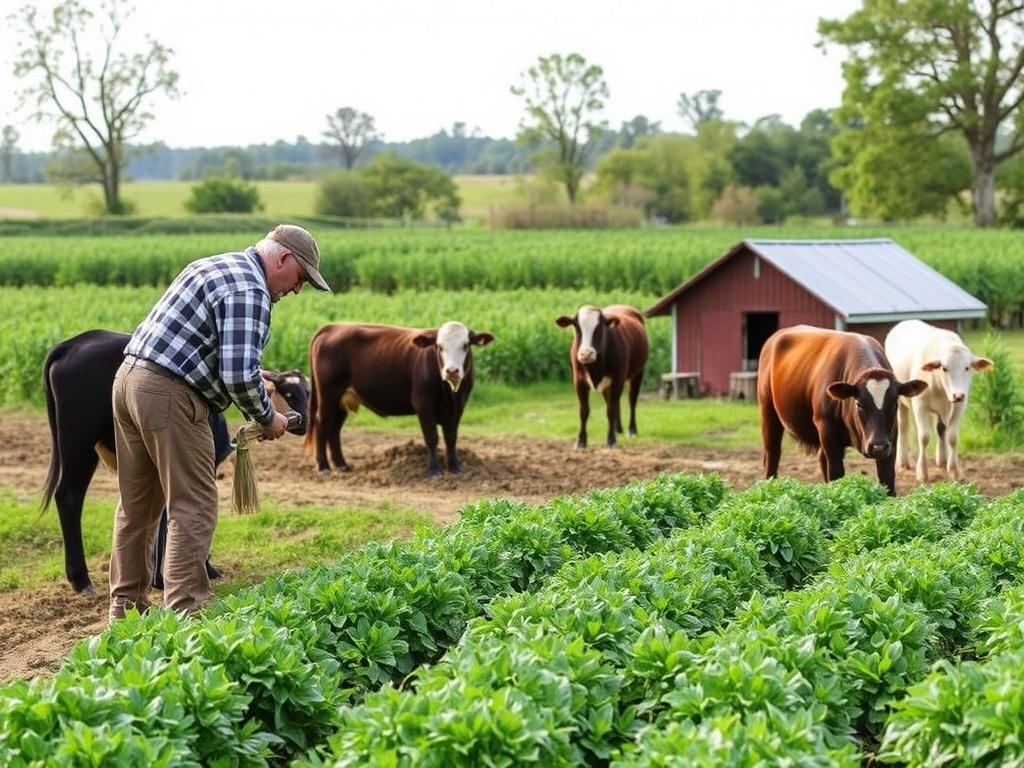
Farming is more than a business; it’s a livelihood, a landscape of memory, and often a family’s identity. Many farm families delay planning what happens next because the daily demands of planting, maintenance, and markets absorb every spare hour. Succession Planning: Securing Your Farm’s Future invites a practical, compassionate approach to passing the land, the enterprise, and the values it embodies to the next steward.
Содержание
Why succession matters now
Farmland demographics are shifting: the average farmer is older than in previous decades, and fewer young people are entering agriculture. Without timely planning, farms risk being fragmented, sold off, or burdened by taxes and legal disputes that erode value and heritage. A considered transition preserves productive acres and reduces the stress that a sudden event—illness, death, or financial trouble—can inflict on a family and the operation.
Succession planning is also a business decision. Decisions made early can optimize tax outcomes, maintain market relationships, and protect eligibility for farm programs. The goal should be to leave the farm in a position where the incoming operator can succeed without being overwhelmed by debt or administrative chaos.
Finally, planning matters for relationships. Clear agreements and expectations reduce conflict among siblings and heirs, and they give the successor a runway to learn, adapt, and build confidence. That human dimension is as important as legal documents when the future of a farm—and a family’s story—are at stake.
Start early: timing and mindset
Make succession a routine part of farm planning rather than a crisis exercise. Early planning gives you time to test transfer mechanisms, adjust agreements, and mentor successors through real seasons and market cycles. Aim to start conversations at least a decade before you expect to step back, and formalize plans several years before you intend to transfer control.
Adopt a pragmatic, flexible mindset: plans will change as markets, family circumstances, and individual interests evolve. A living plan that you review regularly responds to new realities without creating the paralysis that comes from waiting for a perfect solution. Regular reviews—every one to three years—keep the transition aligned with financial and personal objectives.
Treat the process as a business project with milestones, but also recognize the emotional work involved. Map timelines, identify decision points, and assign responsibilities for tasks such as financial audits or legal consultations. Simultaneously, schedule family meetings to share progress, air concerns, and keep communication channels open.
Identify goals and values
Begin by clarifying what «success» means to your family and farm. Is the priority retaining land in the family, maximizing income, preserving a conservation ethic, or maintaining a legacy brand? Writing down core goals and non-negotiables makes subsequent legal and financial decisions far easier. It also reveals areas of compromise where flexibility is possible.
Discuss values explicitly: stewardship of soil and water, worker welfare, community involvement, and the farm’s cultural heritage can all influence the shape of a transition. When values are codified, they can be embedded into operating agreements or conservation easements and guide the successor’s choices. This helps ensure the farm’s purpose survives the transfer of ownership.
Define short-term and long-term objectives separately. Short-term goals might include stabilizing cash flow, retiring a loan, or improving infrastructure. Long-term objectives will inform estate planning choices and the preferred timeline for transferring equity, control, and management responsibility.
Family dynamics and communication
Family conversations about succession can be tense; differing memories, unmet expectations, and unequal involvement in the farm create friction. Structured conversations—facilitated by an experienced mediator, extension agent, or advisor—can keep discussions productive and prevent misunderstandings from hardening into disputes. Set an agenda and ground rules to keep meetings focused and respectful.
Transparency builds trust. Share financial statements, debt levels, and farm performance metrics with potential successors so decisions are based on facts rather than assumptions. Honest sharing reduces surprises later and helps family members make informed choices about their role in the transition. Confidentiality concerns can be managed through phased information release if necessary.
Create a written communication plan that outlines who will be involved in decision-making, how decisions will be made, and how disagreements will be resolved. A clear process for dispute resolution—mediation or arbitration clauses in agreements—saves time and costs if conflicts arise. Regular family meetings scheduled in advance reduce the chance that important decisions are postponed indefinitely.
Choosing a successor: traits and testing
Choosing who will lead the farm is both personal and practical. Look beyond bloodlines if necessary: an experienced hired manager or an in-law with the right skills and commitment may be the best option for preserving the operation. Assess candidates for business acumen, emotional resilience, commitment to farm values, and capacity to learn and adapt.
Test fit with trial periods and progressively increasing responsibility. A multi-year apprenticeship—covering planting, harvest, bookkeeping, and vendor relationships—offers a clear view of capabilities and fit. Short-term setbacks during this period are informative; they reveal how a potential successor responds under pressure and whether they can build problem-solving systems.
Use formal evaluation tools where appropriate, such as written performance goals, 360-degree feedback from employees, and milestone reviews. Document expectations for management, succession, and ownership in a position description or a transition timeline. This reduces ambiguity and helps both parties know when the successor is ready to assume full responsibility.
Train and prepare the next generation
Training the successor should include business and technical aspects. Encourage formal education—certificate programs, agricultural degrees, or specialized workshops—paired with deep, on-farm experience. Exposure to accounting, marketing, and regulatory compliance is as important as mastering crop or livestock routines.
Mental models and decision frameworks are teachable and often overlooked. Walk successors through how you make crop choices, negotiate contracts, and manage cash flow. Explain the rationale behind longstanding practices so successors understand trade-offs rather than simply following habits. That knowledge transfer is the heart of durable succession.
Include non-family employees in training to build a resilient leadership bench. Cross-training staff reduces vulnerability when key people leave and gives successors a team that knows the operation’s systems. A clear succession ladder for employees prevents disruptions and supports continuity after ownership or management shifts.
Legal structures and ownership transfer
The legal form you choose affects taxes, liability, and transferability. Options include sole proprietorships, partnerships, limited liability companies (LLCs), and corporations. Each structure has implications for how ownership interests are split, how decisions are made, and how easily interests can be transferred or sold.
Consider separating legal ownership from management through share classes or operating agreements. For instance, an LLC operating agreement can allocate economic benefits differently from voting rights, allowing retiring owners to retain income while allowing successors to gain management control. These arrangements must be crafted by a lawyer experienced in farm transitions to avoid unintended consequences.
Documenting agreements in writing—buy-sell agreements, operating agreements, and shareholder or partner compacts—prevents ambiguity. These legal instruments should specify valuation methods, terms of sale or buyout, and what happens in disability or death. A well-drafted document is a map for the future rather than a hostage to last-minute emotions.
Wills are the foundation of estate planning but may not be sufficient for complex farms. Trusts provide additional flexibility by allowing staged transfers, protection from creditors, and specific instructions for distributions. A revocable living trust can ease probate while an irrevocable trust can protect assets and achieve tax goals.
Buy-sell agreements are valuable when multiple family members have equity interests or when owners wish to create a market for shares. Agreements establish how the business will handle offers to buy or sell interests, valuation formulas, and funding mechanisms such as life insurance to facilitate buyouts without forcing asset sales. They help maintain stability by creating predictable paths for change.
Life insurance often plays a pivotal role in transitions: policies can fund buyouts, replace lost income, or equalize inheritances among heirs who are not active in the farm. Evaluate insurance needs in the context of liquidity, debt obligations, and family fairness. The right coverage provides breathing room during emotionally charged transitions.
Tax implications and strategies
Taxes are a major determinant of how a transfer should be structured. Capital gains, estate taxes, gift taxes, and generation-skipping transfer taxes influence whether gifting or selling is more advantageous. Consult a tax professional who understands agricultural tax law; small differences in structure can translate into large differences in tax liability.
Strategies include gradual gifting of income-producing assets, installment sales to spreading tax burdens, and use of valuation discounts for minority interests or illiquid assets. Conservation easements and other land-use agreements can also modify taxable value while achieving conservation objectives. Each tactic has legal tests and compliance requirements that must be respected to withstand IRS scrutiny.
Projected cash flow matters because taxes often become a liquidity challenge rather than purely an accounting one. Run scenarios for hypothetical transfer structures—who pays what and when—and stress-test them against adverse market years. Good tax planning aligns estate outcomes with the farm’s operational realities.
Business models for transition: sale, gift, lease, partnership
Multiple paths exist to move the farm to new hands: outright sale, gradual gifting, lease-to-own arrangements, or structured partnerships. The best option depends on family goals, financial needs, and the successor’s capacity to finance the transfer. Each model has trade-offs in control, income, taxes, and risk.
Sale transfers clear ownership but may require the successor to secure financing or pay installments that strain cash flow. Gifting reduces immediate tax burden in some circumstances but can trigger gift tax and may limit the retiring owner’s income. Lease-to-own agreements allow successors to build capital while operating the farm, and partnerships can ease transition by aligning incentives through shared equity.
When considering partnerships, clearly define exit strategies and dispute resolution mechanisms. Partnership agreements should cover capital contributions, profit distribution, management authority, and buyout terms. A documented pathway keeps relationships from dissolving into litigation when life or business disagreements arise.
Protecting assets and managing risk
Risk management is a continuity issue. Insurance—property, liability, crop, and business interruption—reduces the chance that a single event destroys the farm’s viability. Review existing coverage with an eye toward transfer: different ownership structures can change premium costs and coverage needs.
Liability protection is especially important when multiple family members are involved or when non-farm enterprises operate on the property. Consider an LLC or other structure that separates personal assets from business liabilities, and periodically confirm that policies list the correct insured parties. An ownership change should trigger an insurance review.
Contingency planning addresses unforeseen events such as disability, sudden death, or market collapse. Emergency liquidity reserves, prearranged loans, and contingency roles assigned to trusted managers keep operations running while legal steps are taken. A resilient farm survives shocks because planning anticipated them.
Documentation, records, and farm inventory
Accurate records are the scaffolding of a successful transition. Maintain updated balance sheets, inventories of seed and livestock, equipment lists with serial numbers, and documentation of conservation agreements or easements. These records make valuation easier and reduce disputes over what is included in a transfer.
Codify informal knowledge where possible: standard operating procedures, supplier lists, customer contacts, and crop rotation histories are invaluable to successors. A written operations manual reduces learning time and preserves institutional memory that might otherwise vanish with retirement. Regularly back up digital records and store critical paper documents in a secure, accessible place.
Timeline and practical checklist
Break planning into phases with concrete milestones: assessment, goal setting, legal structuring, training, financing, and final transfer. A phased approach makes a large project manageable and creates momentum through measurable progress. Each phase should end with a review and a decision point that informs the next steps.
Use a checklist for recurring tasks: update financials annually, review insurance, reconfirm executor and power-of-attorney designations, and conduct family meetings. Checklists prevent small oversights—missing signatures, expired policies, or unrecorded liabilities—from sabotaging the transfer. Below is a compact table comparing common transfer routes to help frame decisions.
Transfer option
Pros
Cons
Outright sale
Immediate liquidity; clean transfer
Successor needs financing; potential tax on gain
Gifting
Gradual ownership transfer; can reduce estate size
Gift tax issues; donor loses control
Lease-to-own
Successor builds equity while operating
Long transition; potential management conflicts
Partnership
Shared risk; mentorship via shared management
Complex agreements; possible future disputes
Case studies and real-life examples
When I was in my mid-twenties I returned to the family farm and watched my parents try to balance retirement income with passing the business to my sister and me. They chose a phased buy-sell approach: we took over management while they retained a life estate that provided income. The arrangement required annual reviews but gave everyone time to adapt.
Another local farm used an LLC to separate ownership from management, allowing siblings who lived off the farm to maintain financial interest without day-to-day duties. The documented operating agreement prevented misunderstandings when one sibling wanted to sell their interest and the LLC had a right of first refusal. That legal clarity preserved the operation for the active manager.
A third example shows what can go wrong. A family waited until the unexpected death of a patriarch to address succession; disputes over equipment, unpaid loans, and unclear ownership nearly forced a sale. The costs of legal battles and hurried valuations consumed much of the estate. That painful episode motivated neighboring farms to plan proactively.
Working with advisors: who to involve
Build a trusted team that includes an attorney, accountant, farm management advisor, and insurance agent experienced in agricultural transitions. Each professional brings a piece of the puzzle: legal structure, tax optimization, operational planning, and risk mitigation. Seek advisors who understand family dynamics and rural realities, not just corporate models.
Use extension services and farm succession specialists as neutral facilitators for family meetings. These resources often provide templates, workshops, and mediation at a lower cost than private consultants. Combining community resources with private advisors creates both technical rigor and accessible guidance.
Common pitfalls and how to avoid them
Avoid leaving everything to a verbal agreement. Oral promises lead to ambiguity and are difficult to enforce. Always translate conversations into written documents and update them as circumstances evolve so that intentions match legal reality.
Resist the urge to equate fairness with equal shares. Equal financial distribution may be inappropriate if one child will run the farm and others will not. Use buyouts, life estates, or non-farm assets to balance interests fairly rather than simply dividing land equally. Fairness is often contextual and requires creative structuring.
Don’t treat succession as purely legal or tax work. Neglecting the emotional and training components results in operational failures even if the paperwork is flawless. Plan for leadership development, conflict resolution, and cultural transmission alongside legal steps.
Keeping the farm viable after transfer
Long-term viability depends on adapting to market changes and embracing innovation while retaining core strengths. Encourage the successor to build relationships with suppliers and buyers and to experiment with diversification, precision agriculture, or value-added products where appropriate. Continuous improvement keeps the enterprise competitive over generations.
Support the successor’s leadership by ensuring they have access to capital for upgrades and recognizing the need for operational autonomy. Retiring owners can transition to advisory roles that preserve institutional knowledge without micromanaging. A well-paced handoff gives successors the authority to make necessary changes and the safety net of mentorship.
Monitor performance metrics during the early years after transfer: profitability, labor efficiency, debt service coverage, and soil health indicators. Use data-informed reviews to adapt strategies rather than relying on habit. That disciplined stewardship secures the farm for the next generation and beyond.
Resources and next steps
Begin by assembling core documents: up-to-date financial statements, legal ownership documents, insurance policies, and a written list of assets. Schedule a family meeting to discuss values and goals, then engage an attorney and accountant to translate those goals into legal and tax structures. Treat the first year as diagnostic—collect information, identify gaps, and set a realistic timeline.
Use local extension services, agricultural lenders, and nonprofit farm succession programs to access templates, workshops, and low-cost mediation. Peer learning—talking with neighbors who have completed transitions—often uncovers practical pitfalls and creative solutions that professionals may not suggest. Practical experience complements technical advice.
Succession is not a single event but a series of decisions that, taken together, decide whether a farm continues to produce wealth and community value. Start small if necessary, but start intentionally: conversations, documents, training, and review timelines create a pathway that protects both family relationships and farm viability. With care and planning, the land and the enterprise can pass to the next generation in a way that honors the past and sets the stage for future success.