Organic farming carries both a promise and a process: better soil, different pest strategies, and a formal seal that connects producers to consumers. This article unpacks the basics of organic certification and transitioning methods so you can see the steps, trade-offs, and practical tactics that turn conventional acres into certified organic ones.
Содержание
What does organic certification mean?
Organic certification is an independent verification that a farm or handling facility follows a specified set of practices and input restrictions designed to promote ecological balance and conservation of biodiversity. The certification assures consumers and buyers that products were produced according to those rules, from seed and feed choices to pest control and recordkeeping.
Certification is not a one-time label; it’s a documented management system combined with annual inspections and audits. Once certified, operations must maintain records, allow inspections, and adhere to renewal processes to keep the organic seal.
Why farmers pursue organic certification
Many growers convert to organic to capture price premiums, access specialty markets, or respond to consumer demand for fewer synthetic inputs. For others, the motivation is ecological: rebuilding soil health, reducing chemical exposure, and creating more resilient farming systems.
Market access is a big driver. Supermarkets, co-ops, and restaurants increasingly require certified status for suppliers who claim organic. Certification opens doors that informal “organic-style” practices often do not.
Core principles and standards
Standards vary by country but share core principles: avoidance of synthetic fertilizers and most synthetic pesticides, emphasis on preventive management, protection of biodiversity, and maintenance of ecological cycles. Soil fertility and animal welfare receive particular attention.
Regulations spell out allowed and prohibited substances, handling and processing rules, and documentation requirements. Familiarity with your national or regional standard is essential before you begin the transition.
Soil health and fertility
Soil is at the center of organic standards. Practices emphasize building organic matter through compost, cover crops, and reduced disturbance. Synthetic nitrogen and phosphorus inputs are restricted or prohibited, so biological fertility sources and careful nutrient cycling become priorities.
Testing and mapping soil zones across the farm help prioritize amendments and rotations. Soil-building is both a science and a slow craft—results show across seasons rather than overnight.
Pest, weed, and disease management
Organic systems rely heavily on prevention: cultural practices, resistant varieties, habitat for predators, and mechanical controls. When interventions are necessary, permitted botanical or mineral inputs can be used under strict rules.
Integrated pest management (IPM) adapts well to organic systems because it prioritizes monitoring and thresholds rather than routine sprays. Recordkeeping of scouting and actions becomes part of the certification narrative.
Animal production and welfare
Standards for livestock include access to outdoor areas, minimum space requirements, and organic feed sources. Use of antibiotics and certain growth promoters is restricted, and vaccines and therapeutic treatments are handled differently compared to conventional systems.
Producers must demonstrate herd health plans and traceability of feed and replacements, which means planning for maternity, birthing seasons, and sourcing of organic stock.
Choosing the right certifier and understanding costs
Select a certifier accredited in your country or region; they interpret the standard and carry out inspections. Some certifiers specialize in certain commodities or scales of operation, which can influence the inspection approach and cost structure.
Certification costs include application fees, annual inspection fees, and sometimes travel costs for inspectors. Additional expenses are recordkeeping systems and changes to inputs or infrastructure needed to meet standards.
Step-by-step certification process
The certification process generally begins with a written application and a farm plan that describes production practices, inputs, and handling procedures. This plan becomes the central document auditors use to verify compliance.
After submission, an inspector conducts an on-site visit to compare the written plan with the physical operation and records. The inspector checks histories of pesticide use, field boundaries, storage areas, and traceability of inputs and harvested product.
Following inspection, the certifier issues a decision. If compliant, the farm receives certification for a specified scope and the right to use the organic label. If noncompliances are found, the producer receives corrective actions and a timeframe for responding.
Preparing a farm plan
A clear farm plan tells the certifier how you meet standards every step of the way—seed sourcing, soil fertility, pest management, harvest handling, and recordkeeping. Think of it as a living map rather than a static form.
Include schedules for rotations, compost applications, and monitoring. Attach purchase records for allowed inputs and lists of prohibited materials kept off the property.
Inspection day realities
Expect the inspector to walk fields, storerooms, and animal housing. They will ask to see purchase invoices, application logs, seed certificates, and any cleaning or remediation records. Transparency and organization reduce friction.
Inspections are both compliance checks and opportunities to learn: many inspectors offer practical suggestions rooted in the standard’s spirit, not just its letter.
Timing the transition: the conversion period
Most standards require a conversion period—typically 2 to 3 years—during which land must be managed organically before products can be sold as certified organic. The length depends on the preceding use of the land and the specific regulation in your jurisdiction.
That conversion time reflects the pace at which synthetic residues dissipate, soil biology recovers, and systemic changes take hold. It is a period for building practices and demonstrating consistent management.
Conversion examples and strategies
Some farmers convert entire fields in a single season and absorb short-term losses with long-term planning. Others use rotational or split operations, certifying portions of the property at different times to maintain cash flow.
Split operations demand strict internal controls and recordkeeping to avoid commingling organic and non-organic products. Practical measures include separate storage, distinct labeling, and employee training.
Transitioning methods: full-field vs. phased approaches
Full-field conversion means managing all production under organic rules from the chosen start date and waiting the full conversion period before selling the whole output as organic. This approach simplifies internal segregation but risks immediate income reduction if premiums are not yet realized.
Phased approaches stagger conversion—one block or commodity at a time. This reduces financial shock and allows learning on a smaller scale, but raises complexity in tracking inputs, harvested product, and marketing.
Split operation details
Split operations commonly maintain conventional and organic acres side by side. Clear boundaries and buffer zones are essential to protect the organic portion from drift, equipment cross-contamination, and shared input mistakes.
Implementing color-coded tags, dedicated harvest tools, and distinct storage spaces reduces risk. Inspectors will scrutinize these controls during certification.
Buffer zones and drift management
Buffer zones mitigate pesticide drift and contamination from neighboring conventional fields. The required width varies with the standard and the surrounding landscape features such as hedges or windbreaks.
Buffers can be productive: seed them with pollinator habitat, cover crops, or low-risk crops that support biodiversity while protecting the certified acreage.
Soil rebuilding tactics during transition
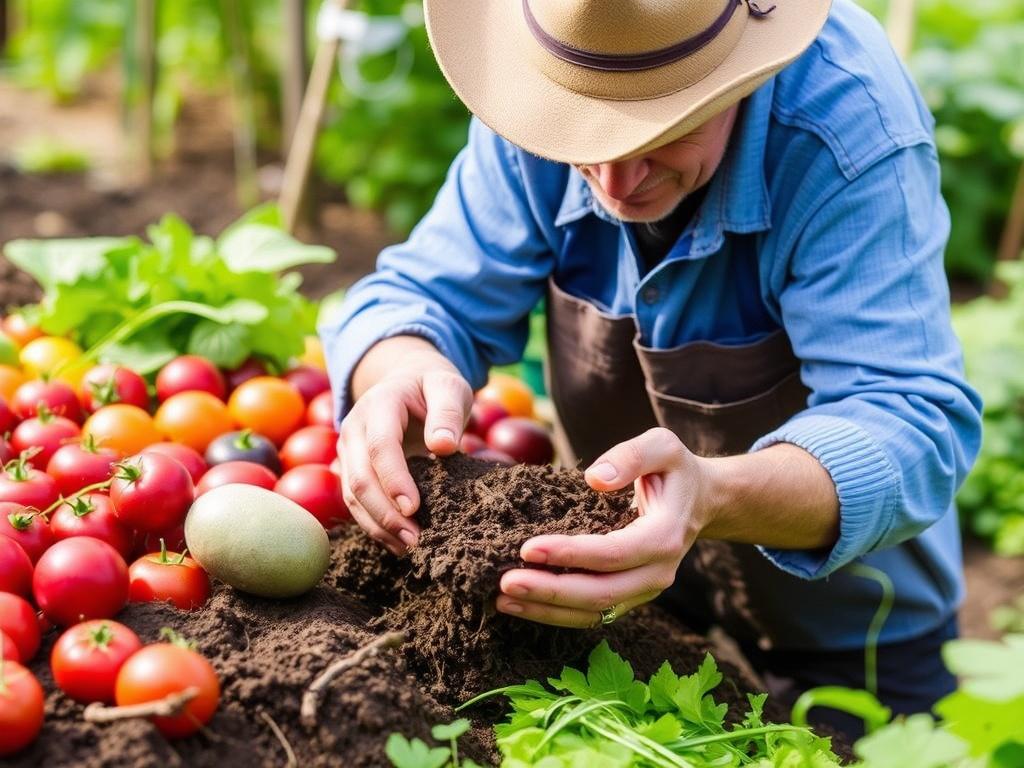
Rebuilding soil biology and structure is arguably the most important investment during conversion. Practices like frequent cover cropping, compost application, and reduced tillage accelerate improvements in organic matter and nutrient cycling.
Tailor amendments to soil tests. Compost and well-managed manures build carbon and microbial life, while certain mineral amendments can correct specific deficiencies when permitted by the standard.
Cover crop planning
Cover crops fix nitrogen, scavenge residual nutrients, prevent erosion, and feed soil microbes. Choose species mixes to match your rotation and climate—legumes for nitrogen-fixation, brassicas for biofumigation, and grasses for biomass.
A well-timed termination preserves soil moisture and reduces pest carryover. Learn the trade-offs between planting density, termination timing, and the subsequent cash crop’s establishment.
Compost and nutrient bookkeeping
Compost quality matters more than quantity. Well-stabilized compost reduces pathogen risk, adds humus, and feeds a diversity of soil organisms. Keep records on compost ingredients, temperatures, and curing times to satisfy inspectors.
Document nutrient inputs and estimates of crop uptake. Many certifiers require nutrient budgets or calculations to demonstrate responsible management and avoid over-application that could harm water quality.
Pest, weed, and disease strategies while converting
During transition, you may lose access to synthetic pesticides and need to rely on prevention and cultural tactics. Emphasize crop diversity, timely tillage, sanitation, and beneficial insect habitat to reduce pressure.
Use monitoring and action thresholds so you act when necessary rather than on a calendar. When permitted inputs are used, document their exact application rates, dates, and product labels.
Mechanical and biological controls
Mechanical options—hoeing, flame weeding, and mechanical cultivators—become central for weed control. These methods are labor- and fuel-intensive but effective when timed correctly.
Biological controls include beneficial insects, microbial sprays, and mating disruption. Success often hinges on creating supportive habitat and avoiding broad-spectrum interventions that reduce natural enemies.
Seed, planting stock, and inputs
Seeds and planting stock must be non-GMO and, when available, certified organic. If organic seed is not commercially available for a particular crop or variety, many standards allow a documented search and use of untreated conventional seed.
Chemical inputs are tightly controlled. Producers must maintain a list of allowed inputs with manufacturer documentation, or use inputs explicitly listed in the standard’s allowed substances list.
Livestock transition and feed sourcing
Transitioning livestock demands careful planning because animals need organic feed and certain living conditions from day one of the certified period. Producers often convert land first and introduce organically raised replacements when possible.
Converting ruminants requires a steady supply of organic-forage and certified organic supplements. Those supplies can be produced on-farm or purchased under verified contracts to prevent feed gaps that could jeopardize certification.
Recordkeeping, traceability, and internal controls
Good records are the backbone of certification. Maintain purchase invoices, application logs, harvest records, storage and sales documents, and the farm plan. Digital systems help but must be backed by consistent practices.
Traceability connects output back to inputs and fields. Numbering lots, keeping harvest dates, and separating organic stocks in storage prevents commingling and strengthens buyer confidence.
Practical record examples
Include seed lot certificates, compost application dates and quantities, pesticide-free affidavits, and daily harvest weigh sheets. Logs don’t have to be fancy, but they must be complete, legible, and easily associated with specific fields or batches.
During inspections, produce these documents in an organized binder or a digital folder so the inspector can verify claims quickly and move on to deeper questions.
Costs, returns, and financial planning
Conversion carries upfront costs and potential short-term yield reductions as systems shift. Budget for certification fees, transitional yield variability, infrastructure changes, and potentially higher labor demands.
Sensible planning includes cash flow projections for the conversion years, identifying markets willing to pay premiums for certified organic, and exploring grant or cost-share programs that many governments or NGOs offer to assist conversions.
Marketing during the transition
Many buyers will not accept transitional products as organic, but some markets value “grown without synthetic pesticides” or “in transition” labels. Be careful: standards typically prohibit using the organic label until certification is final.
Developing direct-market channels like CSAs, farmers markets, or local co-ops can help bridge income gaps by communicating the farm’s stewardship story even before the formal organic seal is granted.
Common challenges and realistic solutions
Challenges include weed pressure in the first seasons, soil nutrient balancing, supply-chain demands for organic inputs, and labor increases. Planning and stepwise adoption reduce the risk of being overwhelmed.
Practical solutions: staggered conversion to spread risk, investment in targeted machinery for mechanical weed control, and membership in cooperative buying groups to lower input costs and secure organic seed or feed.
Example from practice
Working with a small mixed vegetable and poultry operation, I observed that establishing a multi-species cover crop across winter reduced weed pressure and improved the next season’s yields by improving seedbed structure. The owner combined cover crops with a strict harvest and storage separation plan to meet inspection requirements.
That farm used a phased conversion—vegetables first, poultry next—allowing time to secure organic feed contracts and adjust housing to meet access-to-outdoors rules. The staged approach reduced financial strain and simplified recordkeeping during the conversion period.
Choosing practices that suit scale and commodity
Large-scale row crop operations and small diversified vegetable farms both convert successfully, but the tactics differ. Large farms may rely more on machinery and landscape-level fertility strategies, while small farms use intensive rotations and labor-based weed control.
Match your methods to labor availability, soil type, climate, and market access. There is no one-size-fits-all recipe; the best solutions are tailored and iteratively improved.
How inspections evaluate risk and compliance
Inspectors look beyond paper to evaluate whether your daily practices truly reflect the farm plan. They assess risk areas like potential contamination pathways, shared equipment, and inconsistent records.
Address obvious risk areas before the inspector arrives: clean storage, correct labeling, separated equipment, and a coherent explanation of how your practices meet the standard.
International standards and regional differences
While many principles align internationally, standards differ in specifics—conversion length, allowed substances, and processing rules. The U.S. National Organic Program (NOP), EU organic rules, and other national programs each have unique elements and equivalency arrangements.
If you export or work across borders, understand equivalency agreements and additional requirements for exported goods, such as certification translations, additional documentation, or inspections timed to shipping cycles.
Labeling claims and what consumers should know
Certified organic labels indicate compliance with an established standard and inspection. Consumers should look for the certifier name or the official organic seal relevant to their country to verify claims.
Terms like “natural,” “sustainable,” or “made without synthetic pesticides” are not equivalent to certified organic and do not imply inspection. Trusted retailers and certifier directories help verify true organic status.
Practical timeline and checklist
Start at least a year prior to your intended certification application: soil tests, farm plan draft, list of inputs, and a search for organic seed and feed. Some steps—like establishing perennial beds or changing livestock infrastructure—require even more lead time.
Below is a compact checklist and a simple timeline to guide the main activities during transition.
Time before organic sales
Key actions
2–3 years
Stop prohibited inputs, begin organic management across targeted fields, start detailed recordkeeping
Finalize farm plan, choose certifier, prepare infrastructure and storage segregation
Application year
Submit application, schedule inspection, clear any corrective action items
Practical checklist (quick view)
Document previous land use and any pesticide history.
Prepare a written farm plan covering soil, pest, and harvest management.
Create distinct storage and labeling systems for organic and non-organic products.
Establish a recordkeeping system for inputs, compost, and harvests.
Plan rotations and cover crops to suit climate and market crops.
Working with technical advisors and peers
Extension agents, organic certifiers’ guidance teams, and nonprofit programs offer technical assistance and workshops. Peer networks and farmer-to-farmer learning are especially valuable for practical, field-level tactics.
Join local organic associations or online forums to ask specific questions about soil amendments, pest strategies, and marketing channels. Real-world experience from peers often accelerates problem-solving.
Market development and contract considerations
Establish buyer relationships early—some buyers will contract transitional crops, while others require certified status. Contracts help stabilize revenue during the uncertain conversion years and may include price adjustments or volume guarantees.
Negotiate clear terms for delivery dates, certification proof, and quality standards to avoid disputes. Customers value transparent communication about the timing of certification and expected product availability.
Risk management and insurance
Consider crop and liability insurance to protect against unexpected losses and the costs of third-party contamination events. Certain insurance products and disaster assistance programs consider organic status differently, so ask insurers about specifics.
Plan for contamination incidents by having documented mitigation steps and insurance contacts ready; prompt reporting and corrective measures demonstrate compliance and seriousness to certifiers.
Record of inputs: suppliers and documentation
Maintain a list of approved suppliers and catalog numbers for allowed materials. Keep product labels and manufacturer specifications that demonstrate compliance with organic standards.
When purchasing feed, seed, or amendments, secure certificates of organic status or non-GMO assurances where required. These documents become part of your audit trail.
Processing, handling, and post-harvest controls
If you handle, pack, or process products, those facilities also need certification to market the product as organic. Controls must prevent commingling and ensure sanitary handling while respecting allowed processing aids.
Design separate packing lines, clearly label containers, and clean equipment between organic and non-organic runs. Document cleaning procedures and validation of sanitation to satisfy inspections.
Scale and innovation: technology that helps
Modern tools—mobile recordkeeping apps, GPS field mapping, and soil sensors—simplify documentation and decision-making. Technology helps smaller teams manage complex records without drowning in paperwork.
However, technology is a tool, not a substitute for sound agronomic practice. Use it to support decisions, not to replace scouting, sensory observation, and adaptive management.
When things go wrong: corrective actions and appeals
If an inspection finds noncompliance, certifiers typically list corrective actions with deadlines. Respond openly and promptly, and document the preventive measures you implement to avoid recurrence.
For disputes, familiar administrative appeal processes exist. Keep an audit trail and seek mediation or legal advice if a decision seems inconsistent with the standard’s text or your documented practices.
Scaling up certified operations
Scaling organic production requires maintaining the systems that ensured compliance at smaller scales: segregation, recordkeeping, and supplier relationships. Growth often means more complexity, not less.
Consider phased growth, invest in staff training, and modernize record systems before scaling. Buyers will expect consistent quality and traceability as volumes increase.
Final practical tips from experience
Start with a pilot area to learn practical constraints without risking the entire operation. Use that experience to refine your farm plan and teaching materials for staff so everyone understands why practices matter.
Be proactive about communication with neighbors, buyers, and certifiers. Clear communication reduces surprises, fosters goodwill, and smooths the path to successful certification.
Turning land into certified organic production is both a technical and cultural shift. It asks for patience, disciplined documentation, and a willingness to relearn how the farm ecosystem functions. With thoughtful planning, appropriate support, and a willingness to adapt, the transition yields benefits that extend far beyond premiums: healthier soils, resilient systems, and a clear connection between producer practices and consumer trust.