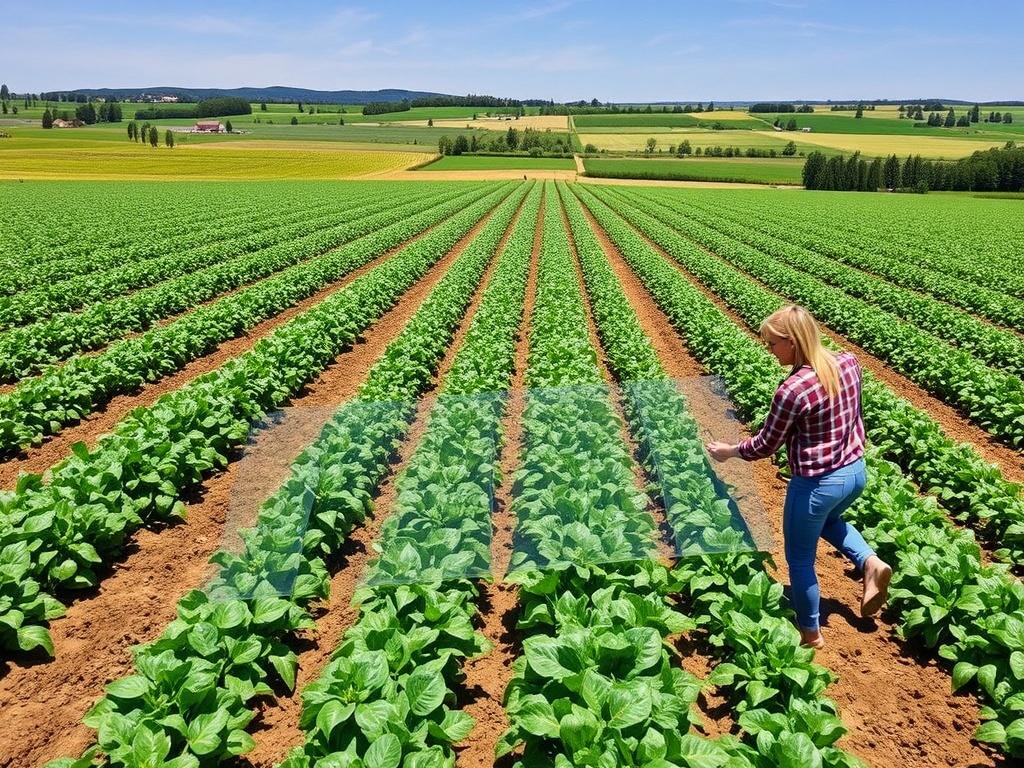
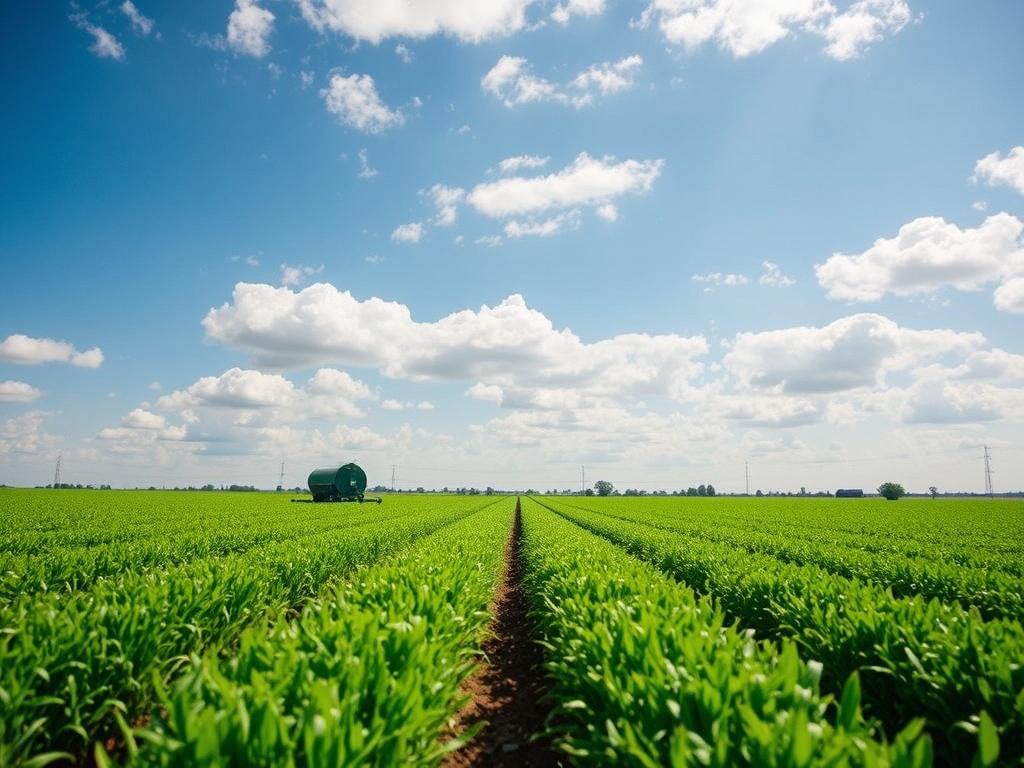
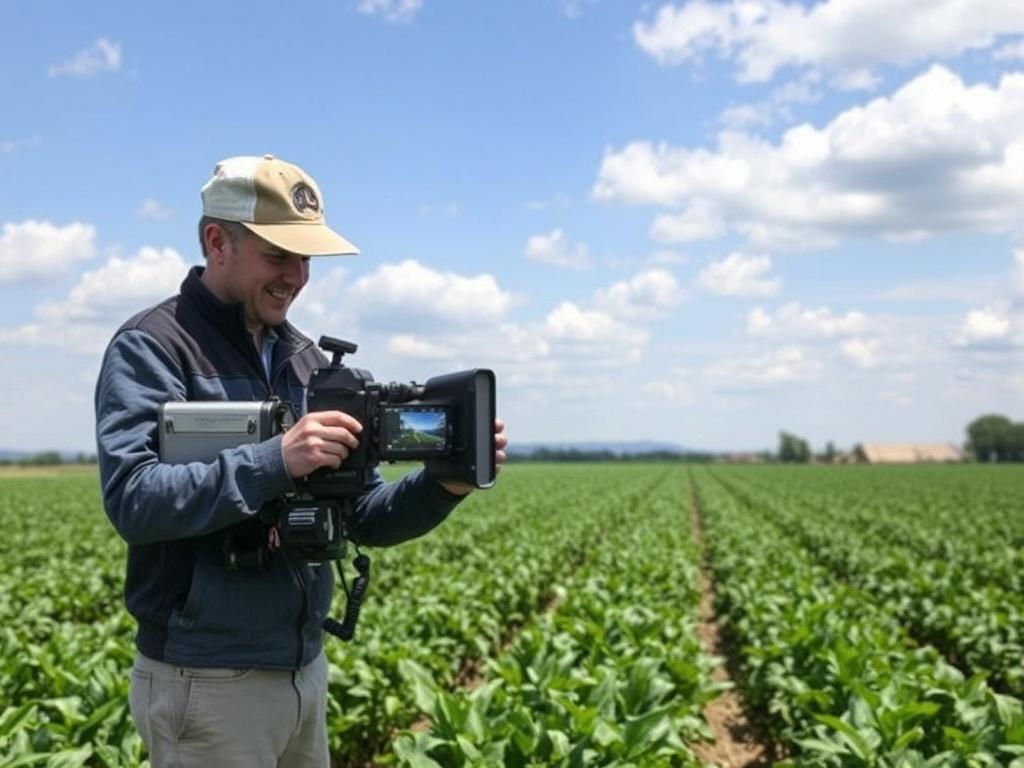
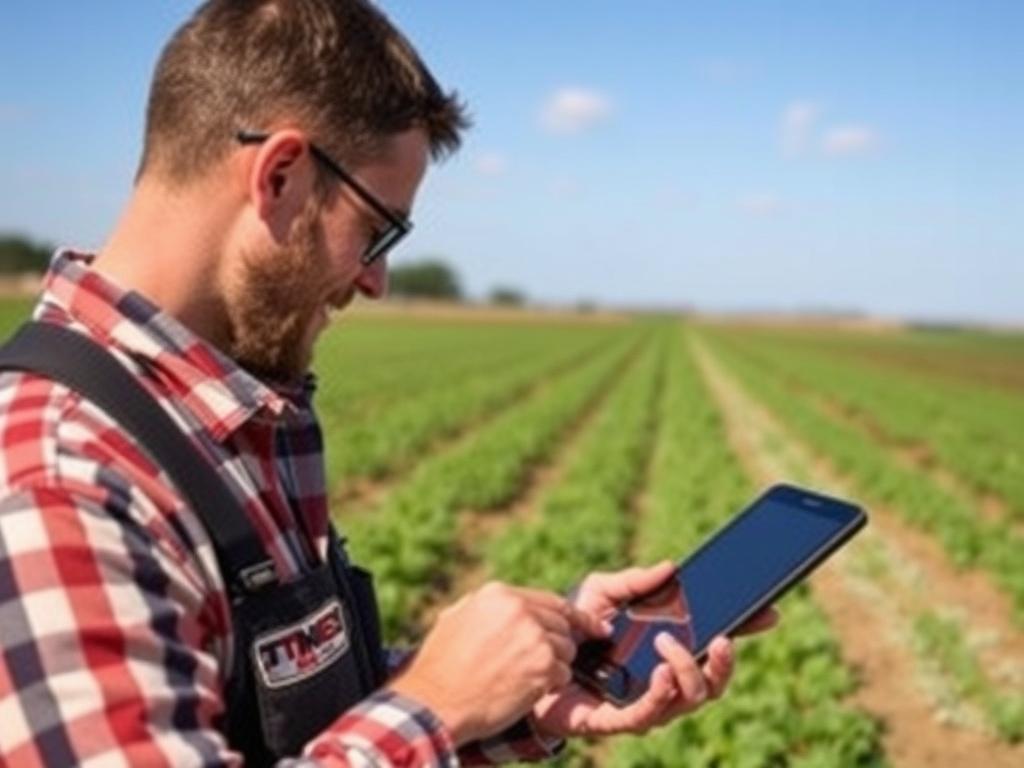
Farms used to be places where experience and instinct guided every season; today they are becoming data centers on wheels and in the sky. Precision agriculture: Using Technology to Increase Efficiency has moved beyond a buzzword into practical tools that help growers apply the right input, in the right place, at the right time.
Содержание
Defining the approach: what precision agriculture really means
At its simplest, precision agriculture is about reducing guesswork. It layers spatial data, sensors, and machinery control so farmers can treat each part of a field according to its specific needs.
This approach replaces blanket treatments with targeted actions — for example, varying seed rates across a field, applying fertilizer only where soil tests show deficiencies, or directing irrigation to water-stressed zones. The result is lower waste, smaller environmental footprints, and often higher net returns.
From plow to pixels: a brief history and why things changed
Mechanization and chemical inputs transformed farming in the 20th century, but those advances were mostly applied uniformly. The seed of precision agriculture was planted when GPS became widely available for civilian use and inexpensive sensors entered the market.
Over the past two decades, improvements in computing, communications, and sensor miniaturization turned niche research projects into off-the-shelf solutions. Farmers who once tracked fields by memory can now visualize soil variability, crop health, and machine performance down to the square meter.
Core technologies powering smarter farming
Several technologies combine to make modern precision agriculture effective; each contributes unique data and control capabilities. Together they form a layered system of observation, analysis, and action.
The most prominent technologies include GPS/GNSS guidance, remote sensing from drones and satellites, in-field sensors, automated machinery, and data analytics platforms driven by machine learning.
GPS and guidance systems
Satellite positioning provides the spatial backbone for precision work. With centimeter-level accuracy achievable through real-time kinematic (RTK) corrections, planters and sprayers can overlap less and operate more precisely.
Guidance systems reduce operator fatigue, lower input overlap, and allow high-speed precision tasks. That accuracy is the foundation for mapping yields, tracking application histories, and conducting repeatable operations across seasons.
Remote sensing: satellites, drones, and aerial imagery
Remote sensors capture the crop’s condition from above, revealing patterns invisible at ground level. Normalized Difference Vegetation Index (NDVI) and other vegetation indices translate light reflectance into actionable insights about vigor and stress.
Drones offer flexible, high-resolution scouting, while satellites provide regular, wide-area coverage. Many farmers combine sources: satellite imagery for broad monitoring and drones for rapid, targeted inspections where the satellite shows anomalies.
In-field sensors and Internet of Things (IoT)
Soil moisture probes, weather stations, and plant sensors deliver continuous streams of local data. When distributed across a field, those devices create a real-time picture of conditions that matter most to crop development.
IoT connectivity enables these devices to feed data into farm management systems, where thresholds can trigger automated irrigation events or alert managers to sudden changes. This immediacy shortens the feedback loop between observation and action.
Automated machinery and robotics
Autosteer, section control, and variable-rate application modules let tractors and sprayers apply inputs with surgical precision. More advanced platforms include autonomous tractors and weeding robots that can operate for long hours with little human intervention.
Robotic systems also reduce labor bottlenecks during peak seasons and can undertake delicate tasks — like targeted mechanical weeding — that reduce herbicide reliance. As autonomy improves, operators shift from manual control to supervision and exception management.
Data analytics, cloud platforms, and AI
Raw data is useless until it becomes insight. Cloud-based farm management platforms aggregate sensor feeds, imagery, and historical records, applying analytics to generate prescription maps and decision support.
Machine learning models can diagnose stress, forecast yield, and recommend variable-rate prescriptions based on patterns learned from many fields and seasons. These predictive capabilities are turning reactive farming into proactive management.
Adoption is motivated by a mix of economic, environmental, and operational reasons. When done thoughtfully, precision practices can pay back quickly through input savings and yield improvements.
Key benefits include reduced fertilizer and pesticide use, lower fuel consumption from optimized machinery paths, improved yields in variable fields, and better compliance with environmental regulations and consumer expectations.
Economic gains and input optimization
Applying nutrients and crop protection only where needed reduces material cost and avoids damaging over-application. Variable-rate seeding can match plant populations to micro-environments, enhancing yield potential and uniformity.
Many growers report improved margins after a learning curve, especially where inputs are expensive and fields show high spatial variability. The magnitude of benefit depends on crop type, farm scale, and management skill.
Environmental stewardship
Precision approaches reduce nutrient runoff, lower greenhouse gas emissions per unit of crop, and limit off-target pesticide exposure. These practices support soil health and biodiversity by avoiding blanket treatments.
As supply chains and retailers demand sustainability metrics, precision tools also help farmers document improvements and qualify for incentives or market premiums tied to environmental performance.
Labor efficiency and safety
Automation reduces the need for long, repetitive hours behind the wheel and shifts staff to higher-value tasks like system management and planning. That flexibility eases labor shortages and reduces fatigue-related errors.
Additionally, remote monitoring and alerts can prevent dangerous situations, such as irrigation system failures or chemical application mishaps, improving on-farm safety and reducing liability.
How data flows: from field sensors to decision
Understanding the data lifecycle helps farm managers design workflows that turn observations into timely actions. A clear pipeline prevents data from becoming another unused archive.
The typical flow: collect spatially referenced data, clean and integrate it into a management platform, analyze to generate prescriptions, and execute through compatible machinery. Feedback from yield monitors closes the loop for continuous improvement.
Data collection and quality control
Device placement, sensor calibration, and consistent sampling protocols determine data usefulness. Poor-quality inputs lead to misleading recommendations, so farms often start small and validate data streams before scaling up.
Metadata — time, GPS coordinates, device ID — is as important as the measurement itself. Good metadata ensures datasets from different seasons and machines can be compared reliably.
Interoperability and standards
One persistent challenge is making systems talk to each other. Different manufacturers use proprietary formats, and integrating these sources requires middleware or adherence to open standards like ISOXML and ADAPT.
Choosing tools that support common exchange formats reduces vendor lock-in and simplifies data-driven decision-making across the farm enterprise.
Real-world examples and an author’s field experience
I worked with a midwestern corn-soy operation that began with yield mapping and soil sampling. They used RTK-guided planting and variable-rate phosphorus to match zones identified by their first year of data.
Within two seasons, they cut phosphorus use by nearly 20 percent in low-response areas while raising yield in previously underperforming strips. The biggest gain was less muddled thinking — the maps clarified where problems were agronomic versus equipment-related.
Another case involved a vegetable grower deploying drone scouting and moisture sensors. By targeting irrigation and spot-treating disease outbreaks, they reduced water use and pesticide costs, and they extended harvest windows for premium pricing.
Common implementation pathways: pilot-to-scale
Successful adoption often follows a staged approach that reduces risk and builds internal capability. Pilots validate technology and show measurable benefits before full-scale investment.
Start with clear objectives: reduce fertilizer costs, manage irrigation, or combat a specific pest. Choose a manageable pilot area, collect baseline data, and track outcomes relative to control plots.
Key steps for a pilot project
Define metrics and success criteria before deploying equipment.
Use proven sensors and ensure proper calibration and maintenance.
Train personnel on data processes and machine operation.
Review results and iterate — extend the pilot only after demonstrated gains.
Pilots create confidence and provide case-specific parameters for scaling. They also reveal hidden costs, such as data subscription fees or extra technician time for maintenance.
Costs, financing, and measuring return on investment
Upfront costs include hardware, software subscriptions, installation, and training. Recurring expenses are data plans, calibration, and platform fees. Yet many costs decline as more operations are automated and as unit prices fall with scale.
Calculating ROI requires careful accounting of direct savings (less fertilizer, fuel, labor) and indirect benefits (lower environmental penalties, premium market access, and better risk management). Payback periods can range from a single season for high-value crops to several years for broad deployments.
Typical cost components
Item
Typical cost range
Role
GPS/RTK base and rover
$5,000–$30,000
Provides high-accuracy positioning for guidance and mapping
Yield monitor
$2,000–$15,000
Records harvest performance across the field
Drones and sensors
$1,500–$25,000
Accounts for scouting, high-res imagery, and specialized sensors
Soil moisture and weather stations
$500–$5,000 per node
Provides local environmental monitoring
Software subscriptions
$200–$2,000+ per year
Data management and prescription generation
These ranges are illustrative; prices evolve quickly and vary by geography, crop type, and buying scale. Shared ownership models, cooperatives, and service providers can lower barriers for smaller operations.
Barriers and how to address them
Technology isn’t a panacea. Farmers face hurdles like up-front capital, limited technical skills, patchy connectivity, and concerns about data ownership. Addressing these barriers requires a mix of policy, training, and creative business models.
Extension services, equipment dealers, and third-party advisors can bridge knowledge gaps. Leasing models, cost-share programs, and cooperative investment help spread capital costs across multiple producers.
Data privacy and ownership
Who owns sensor and yield data matters. Contracts can limit how vendors use farm data, and clear agreements help preserve a farm’s bargaining power. Many farms insist on clauses that prohibit sharing data without explicit consent.
Open dialogues with providers and peers help create standards for ethical data use. Some growers choose on-premise solutions or self-hosted platforms for sensitive datasets.
Connectivity and rural broadband
High-bandwidth connectivity unlocks real-time analytics and cloud-based services, but many rural areas still struggle with reliable broadband. Edge computing and local gateways can mitigate this gap by processing data onsite and syncing selectively.
Policy initiatives and private investment are gradually improving rural connectivity, making real-time farm analytics more feasible for a broader audience.
Regulatory and supply chain implications
Precision tools also influence compliance and market access. Accurate application records and environmental data can help demonstrate permit compliance and meet retailer sustainability requirements.
Some programs provide financial incentives for practices that reduce nutrient runoff or sequester carbon, and precise measurement makes participation and verification easier for producers.
Technology comparison: choosing the right toolkit
No single technology fits every farm. The right mix depends on crop, field variability, labor availability, and business objectives. A pragmatic selection balances cost, complexity, and expected returns.
The table below summarizes common tools and when they make the most sense for typical producers.
Technology
Best for
Primary benefit
RTK GPS guidance
Any row crops, large-scale farms
Reduces overlap and operator error
Yield mapping
Crops with established harvesters
Identifies productivity zones
Soil sampling & VRA
Fields with spatial fertility variation
Optimizes nutrient application
Drones
Specialty crops, urgent scouting
High-resolution stress detection
Soil moisture sensors
Irrigated farms
Improves irrigation scheduling
Training, skills, and building a digitally ready team
Technology adoption succeeds when people understand both the tools and the agronomy behind them. Training staff on sensor maintenance, data interpretation, and machine operations is essential.
Farmers benefit from mixing in-house expertise with external advisors — agronomists, agritech consultants, and equipment technicians. Cross-training helps ensure continuity when staff turnover occurs.
Education pathways
Workshops and field days hosted by extension services or equipment dealers
Online courses in GIS, data analytics, and precision farming techniques
Mentorships and cooperative learning among neighboring farms
Investing in people often yields the greatest returns: skilled operators avoid costly mistakes and extract more value from the same equipment.
Emerging trends to watch
Precision agriculture continues to evolve. Advances in sensors, robotics, and computation are expanding capabilities and lowering costs, bringing previously experimental tools into everyday use.
Key trends include more autonomy, edge AI that analyzes data on the machine, swarm drones for rapid field treatments, and improved multispectral sensors that detect problems earlier and more specifically.
Automation and autonomy
Autonomous vehicles will handle repetitive tasks like tillage, planting, and targeted spraying, freeing human operators to focus on strategy. Continuous improvements in perception and decision-making make autonomous fleets safer and more reliable.
That shift implies new business models where fleets are shared or operated as services, reducing capital requirements for individual farms.
Digital twins and simulation
Digital twins — virtual replicas of fields and equipment — enable scenario testing and optimized planning before committing resources. By simulating weather, soil, and management interactions, farmers can evaluate outcomes with less risk.
As model accuracy improves, simulations support more resilient decision-making under variable climate and market conditions.
Practical checklist for getting started this season
Start simple and iterate. A pragmatic checklist helps avoid wasting money on underused gadgets and aligns purchases with measurable goals.
Identify one or two business objectives to focus on this year.
Choose a pilot field and collect baseline data (yield, soil tests, imagery).
Select interoperable tools that match objectives and budget.
Train staff and set up data management practices before full deployment.
Measure outcomes and refine prescriptions for the next season.
Following a focused roadmap reduces risk and produces evidence that helps secure buy-in from partners, lenders, or cooperatives.
Policy, incentives, and public-private partnerships
Government programs and conservation initiatives increasingly support precision practices that reduce environmental impacts. Cost-share programs can significantly lower adoption barriers for capital-intensive technology.
Public-private partnerships are also enabling pilot demonstrations, data-sharing agreements, and rural broadband investments that accelerate local adoption. Farmers should explore these programs to offset early costs and gain technical support.
Final thoughts: a pragmatic path to smarter farming
Technology will not replace farmer judgment, but it amplifies it. When combined with thoughtful agronomy, the tools of precision agriculture help producers make decisions with greater confidence and less waste.
Adopt deliberately, start small, and measure everything. Those who treat data as an asset — not an ornament — find that smarter inputs and sharper timing lead to more resilient operations and healthier landscapes.